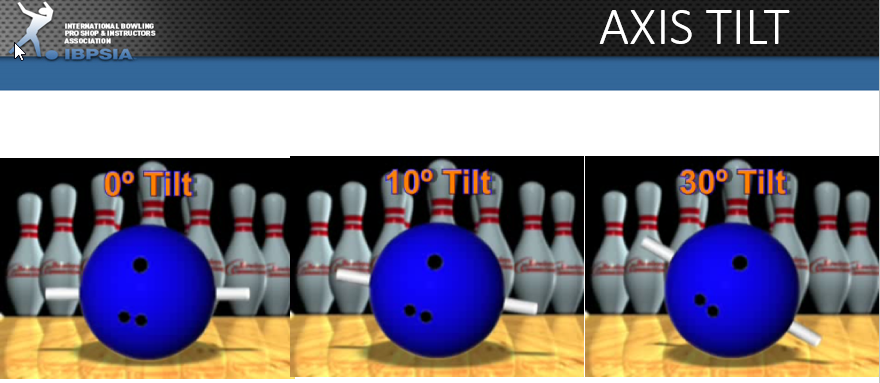
Axis Tilt
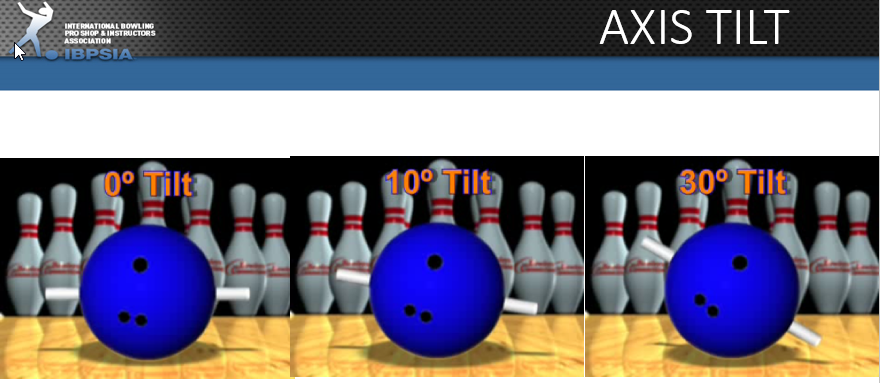
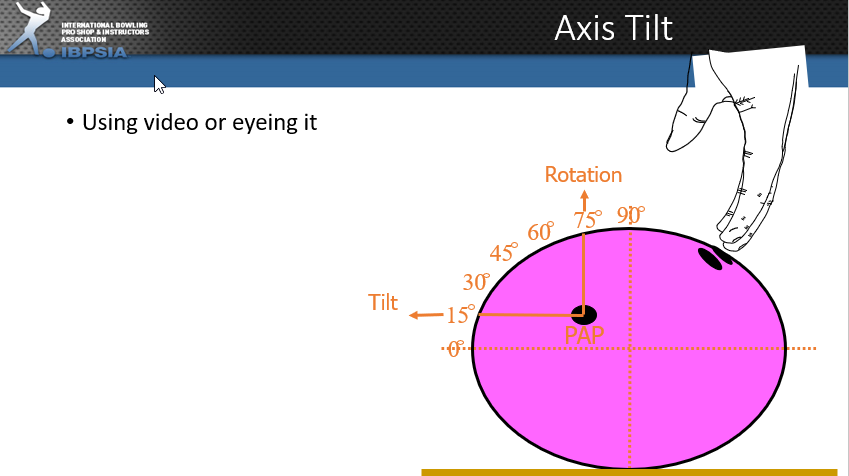
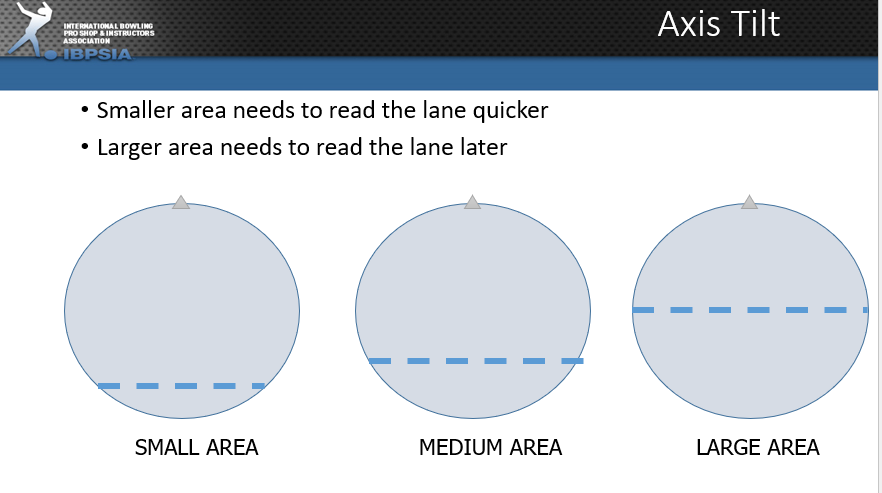
Bowling axis tilt is the upward or downward angle of the ball's axis of rotation relative to the lane, affecting how much of the ball's circumference touches the lane. A higher tilt results in a longer, straighter ball path with a sharper reaction, while a lower tilt causes the ball to roll earlier and have a softer reaction. Understanding axis tilt is crucial for choosing the right bowling ball and layout for a player's game, which can lead to higher scores .
How it works:
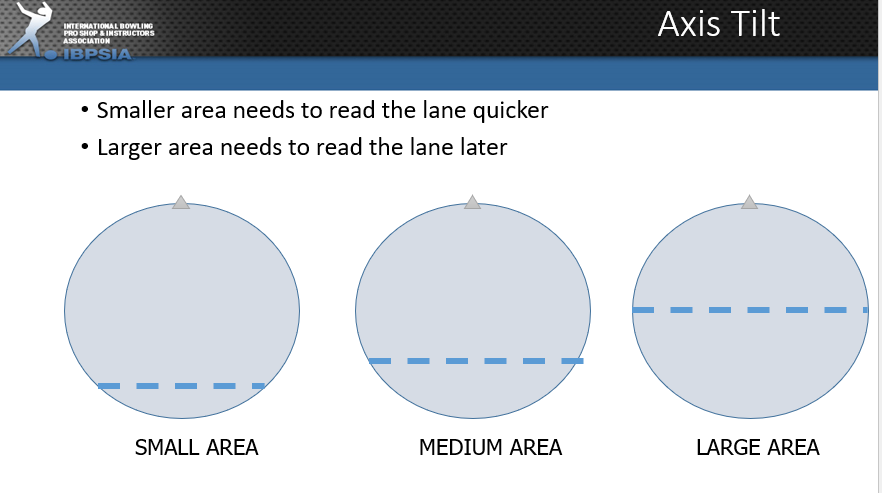
-High axis tilt ( >40 °): The ball spins more like a top and rolls over a smaller portion of its circumference. This allows the ball to travel further down the lane before hooking sharply.

-Low axis tilt (<7° ) :The ball rolls over more of its circumference, causing it to hook earlier in the lane and have a softer, more gradual reaction.
-Medium axis tilt : This is often the desired range, providing a balance between length and a strong backend reaction.
-The same procedure applies — that is, placing a piece of tape on your PAP (Positive Axis Point).
- Video analysis: You can take a video of your release from a low angle and analyze it with special tools or by frame-by-frame analysis.
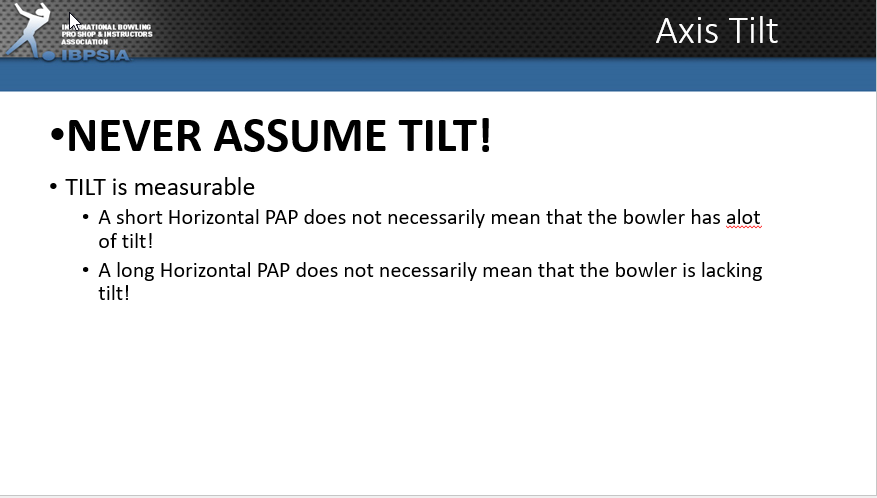
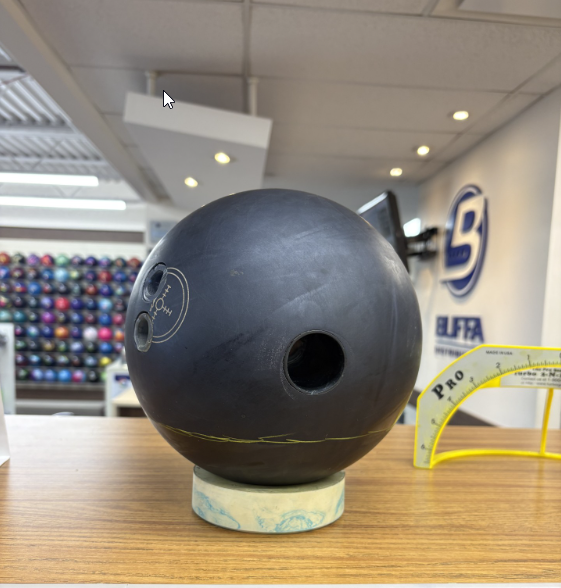
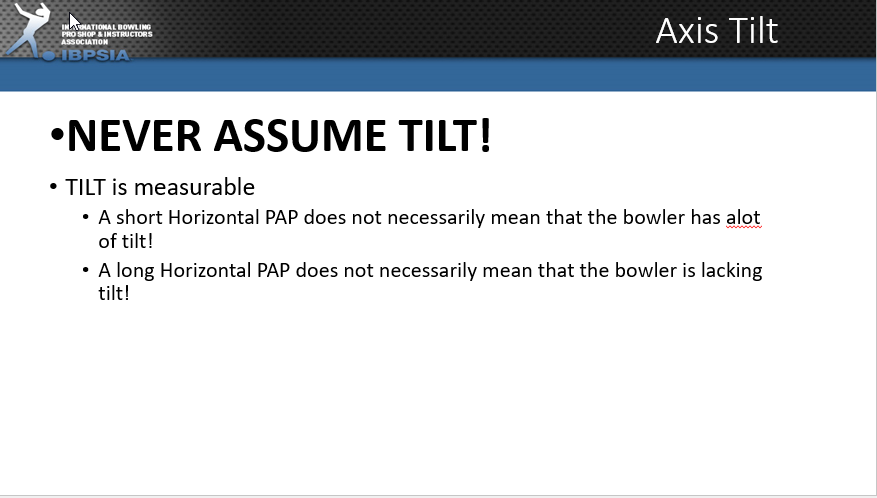
NEVER assume the axis tilt. You need to draw the first oil line closest to your grip and follow it all the way around the ball.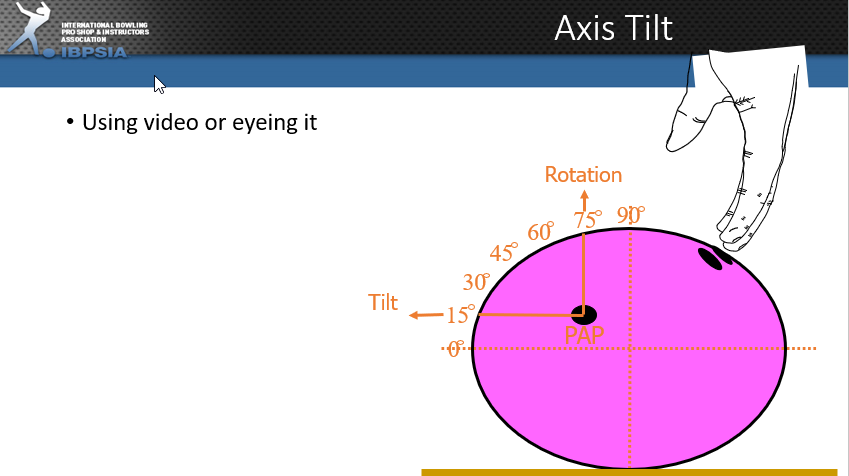
-
-
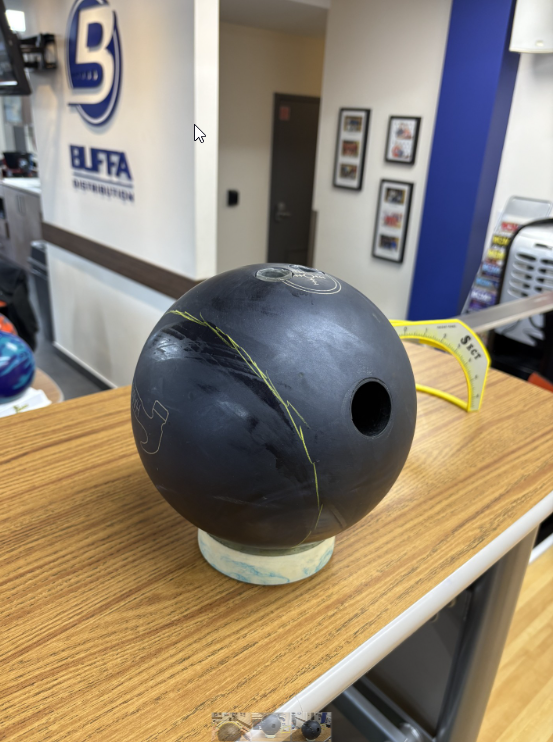
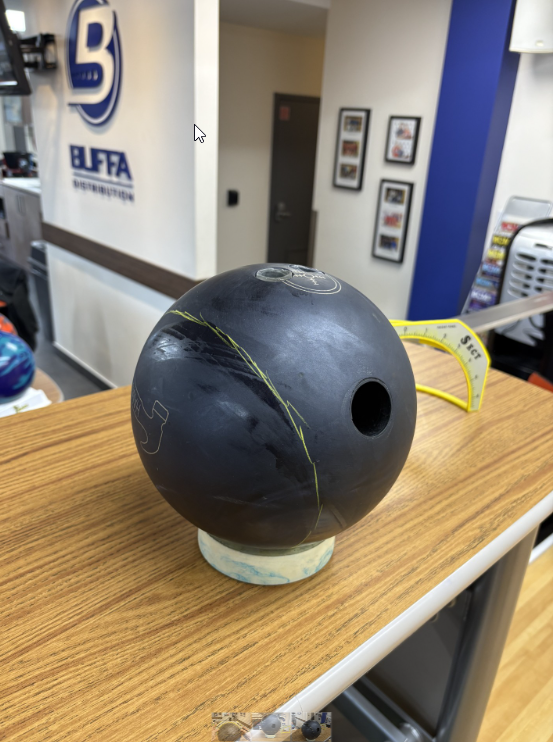
Then, turn the ball to ensure the yellow line you marked is parallel to the ground.
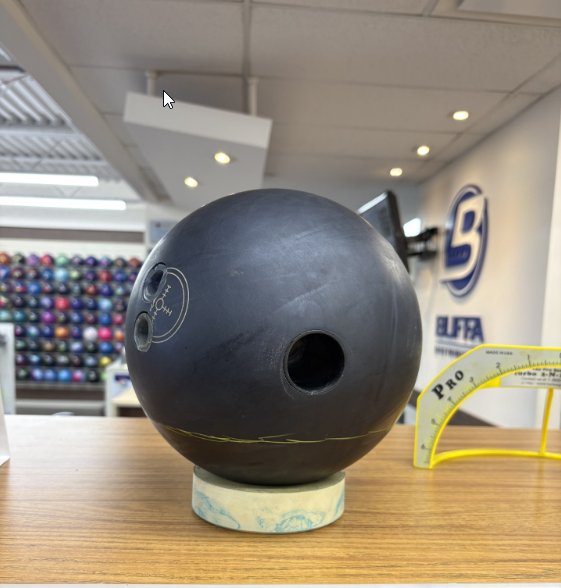
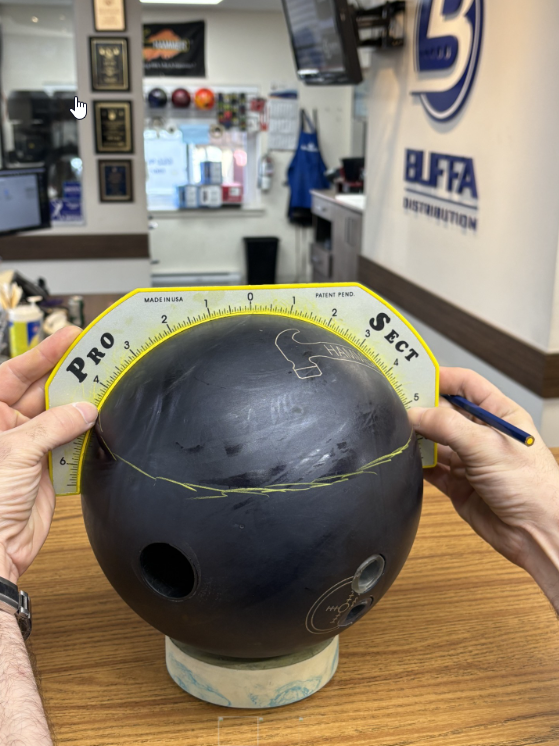
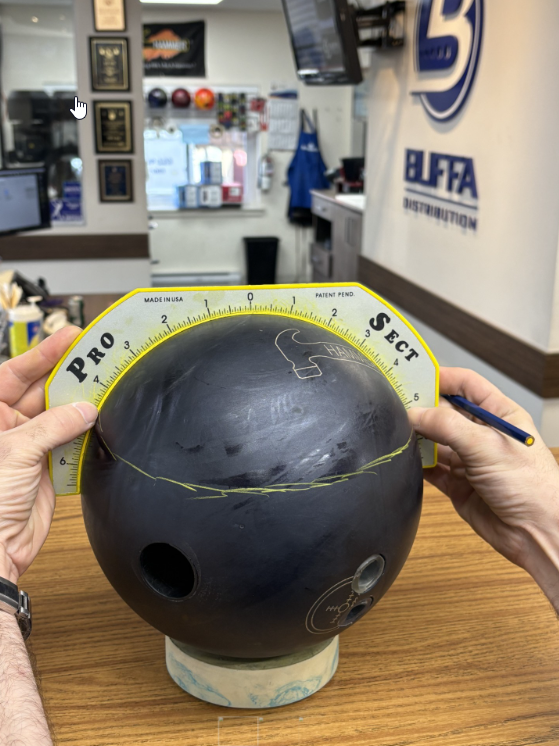
- To determine the tilt angle, flip the ball so that the circle is on top. Then, using the Prosect tool, align the 0 with the highest point on the ball and measure both sides where the lines connect. See the image below. The distance is in Inches !!!
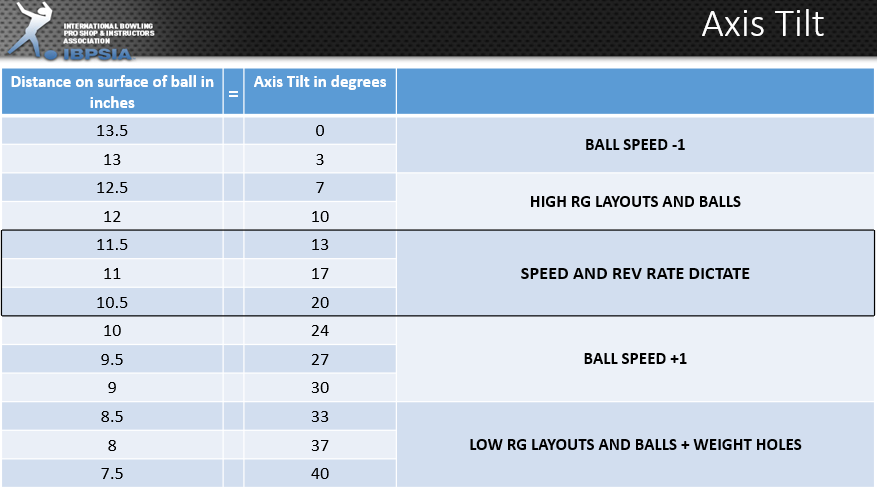
- Using the chart, the distance you found will tell you your tilt angle.
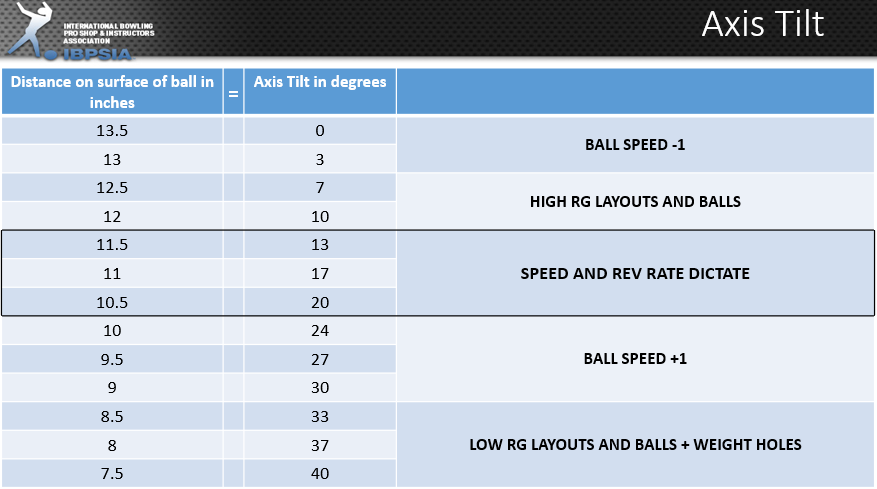
- In the example above, the distance is 10 inches, so the tilt is 24 degrees.