
Sum of angles
? What Is the "Sum of Angles" in Bowling Ball Layouts?
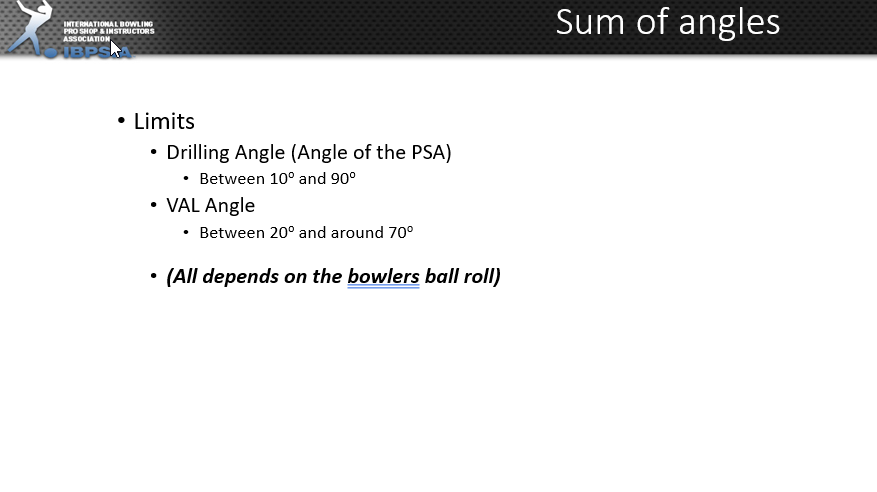
In the Dual Angle system, a layout is described by three measurements:
Drilling Angle / Pin-to-PAP Distance / VAL Angle
Example:
60° × 4" × 40°
The sum of angles is simply the Drilling Angle + VAL Angle:
? 60° + 40° = 100° (Sum of Angles)
? What Does the Sum of Angles Control?
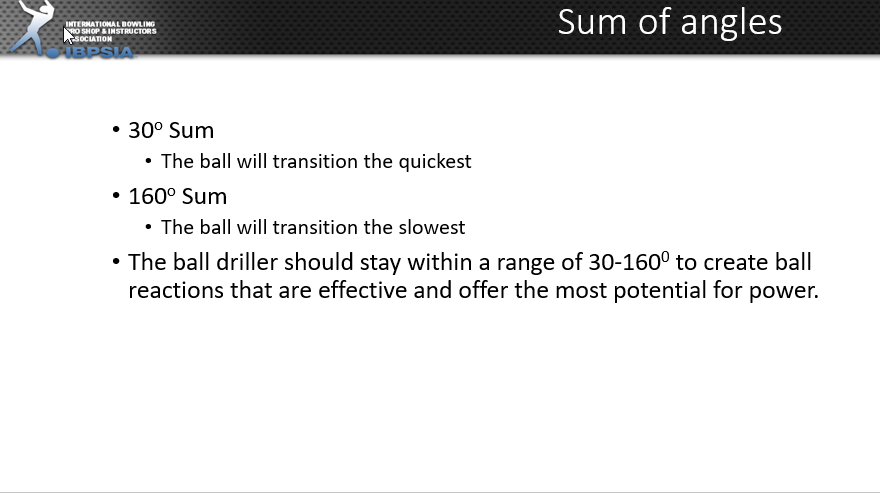
The sum of angles determines how early or late the bowling ball transitions from skid → hook → roll.
| Sum of Angles | Ball Motion | Lane Read |
|---|---|---|
| Small sum (≈ 70°–90°) | Earlier roll, stronger mid-lane read | Heavier oil or lower rotation players |
| Medium sum (≈ 100°–120°) | Benchmark reaction, balanced motion | Medium oil conditions |
| Large sum (≈ 130°–160°) | Delayed hook, sharper backend | Drier lanes or high rotation players |
?Recommended Sweet Spot (Base Values)
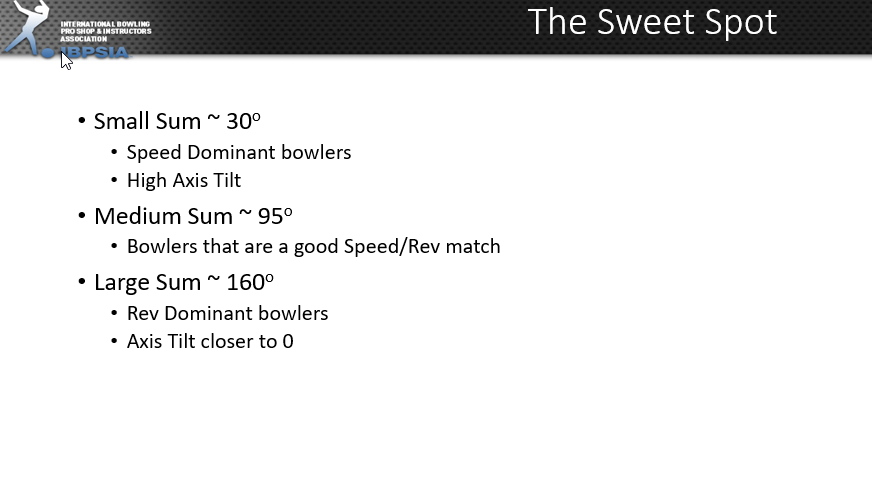
| owler Type | rilling Angle | VAL Angle | Sum of Angles (Sweet Spot) | Type of Reaction |
|---|---|---|---|---|
| Stroker (low rotation, medium speed) | 40°–50° | 30°–40° | 70°–90° | Smooth and predictable reaction |
| Tweener (medium rotation) | 50°–60° | 40°–50° | 90°–110° | Balanced / benchmark reaction |
| Cranker (high rotation, higher speed) | 60°–70° | 50°–60° | 110°–130° | Longer and more angular reaction |
? Example Layouts by Condition
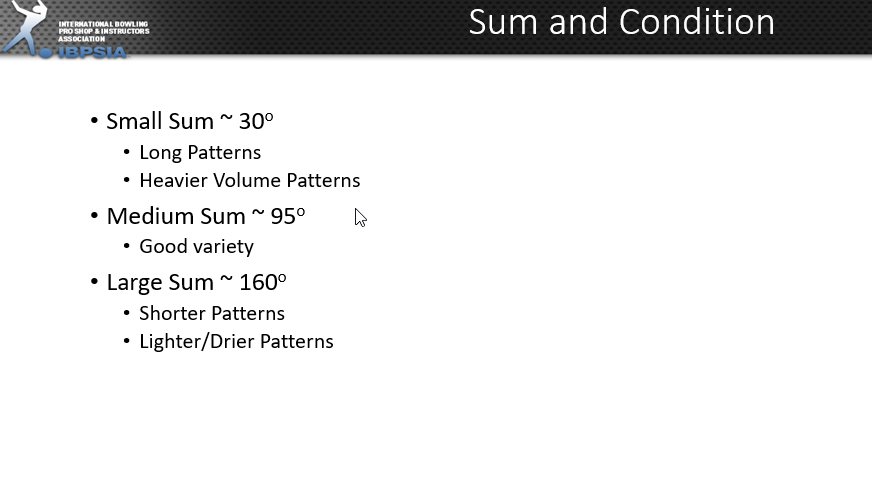
| Lane Condition | Example Layout | Sum of Angles | Reaction Type |
|---|---|---|---|
| Heavy oil | 40° × 4" × 30° | 70° | Early, smooth arc |
| Medium oil | 60° × 4.5" × 40° | 100° | Benchmark motion |
| Light oil | 80° × 5" × 60° | 140° | Long, angular backend |