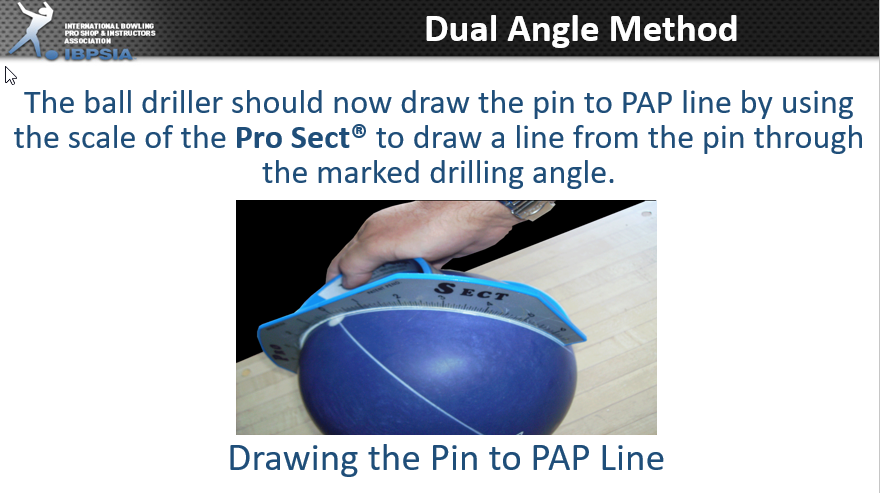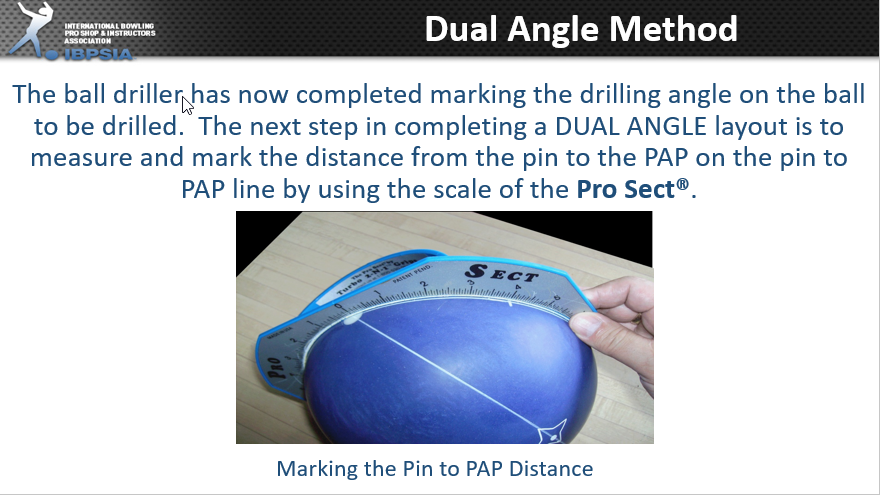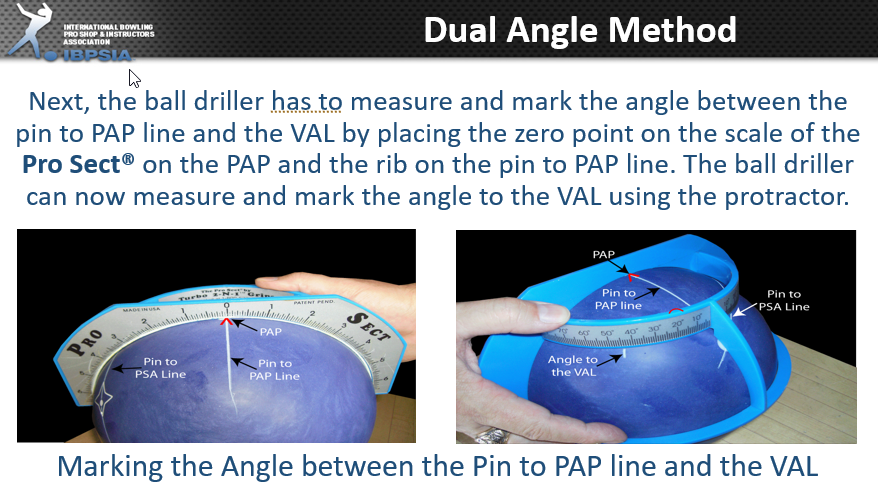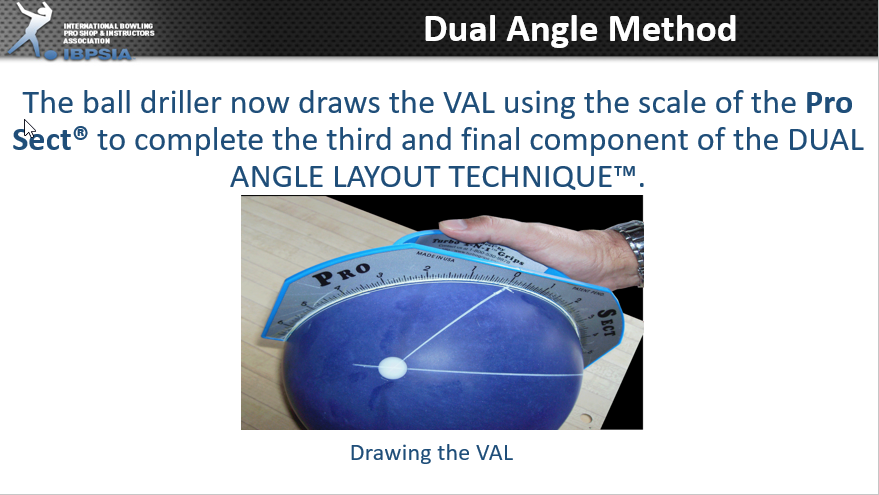
Dual layout
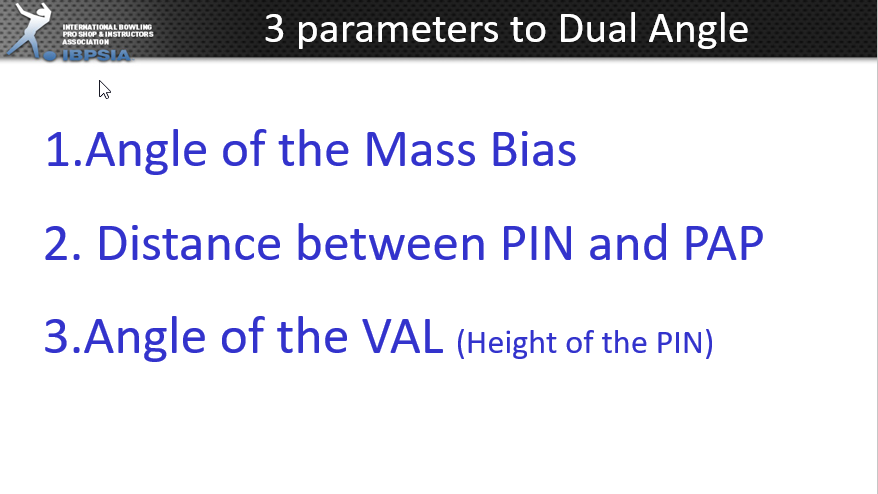
? The 3 Parameters of the Dual Angle Layout
-
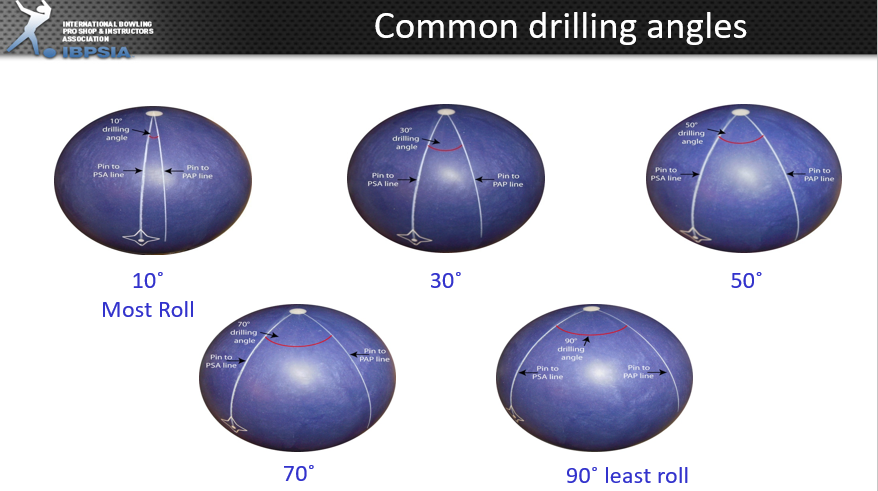
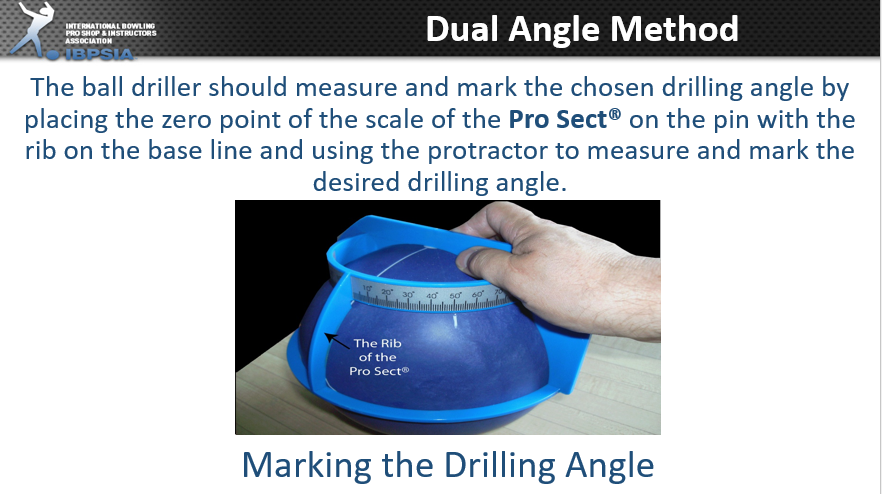
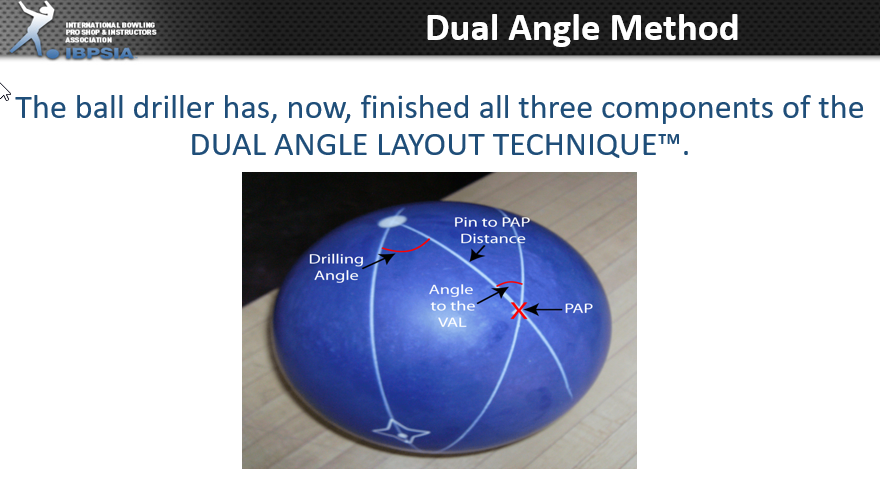
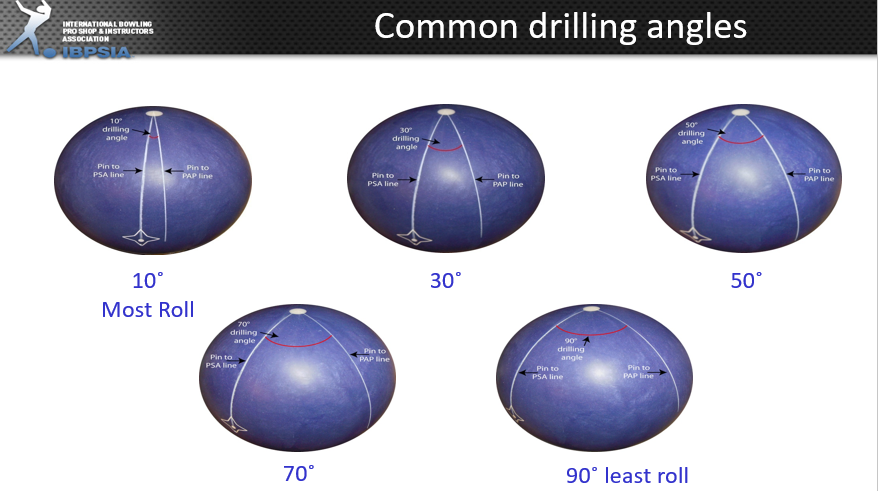
Drilling Angle (First Angle)
-
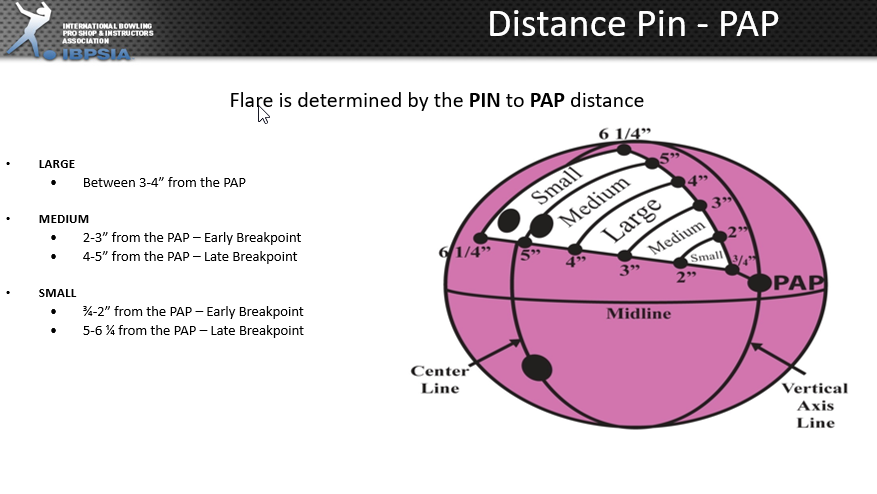
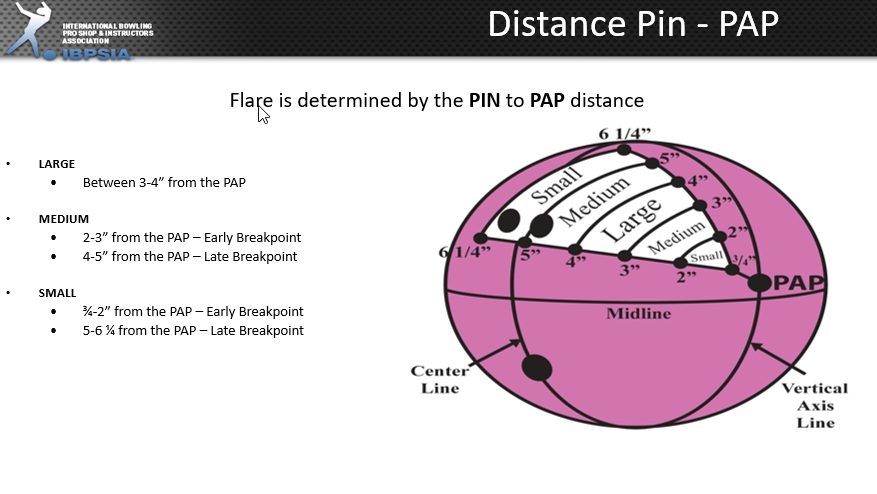
Pin-to-PAP Distance
-
VAL Angle (Second Angle)
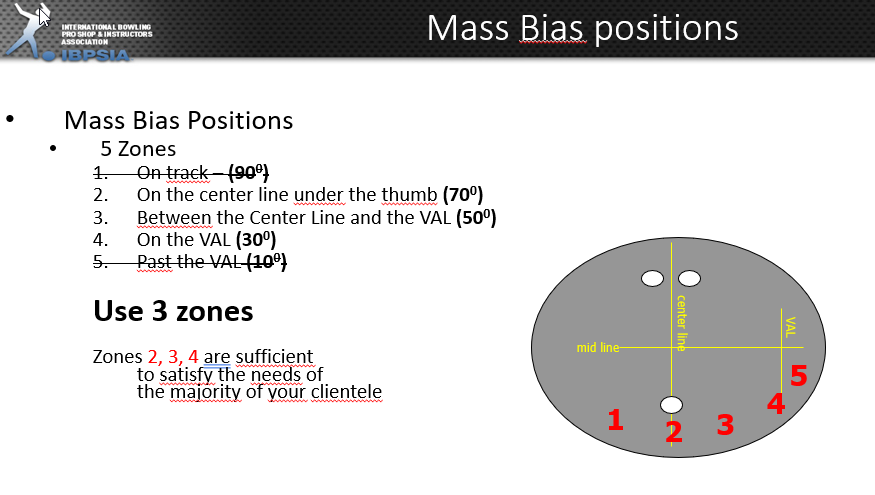
? Why does the Mass Bias angle matter?
-
A smaller MB angle means the ball will transition more smoothly from hook to roll, with less aggressive backend movement.
-
A larger MB angle increases the angularity and sharpness of the backend reaction.
-
Ball drillers use this angle to tailor the ball’s reaction for your style and lane conditions.
See exemple :
-
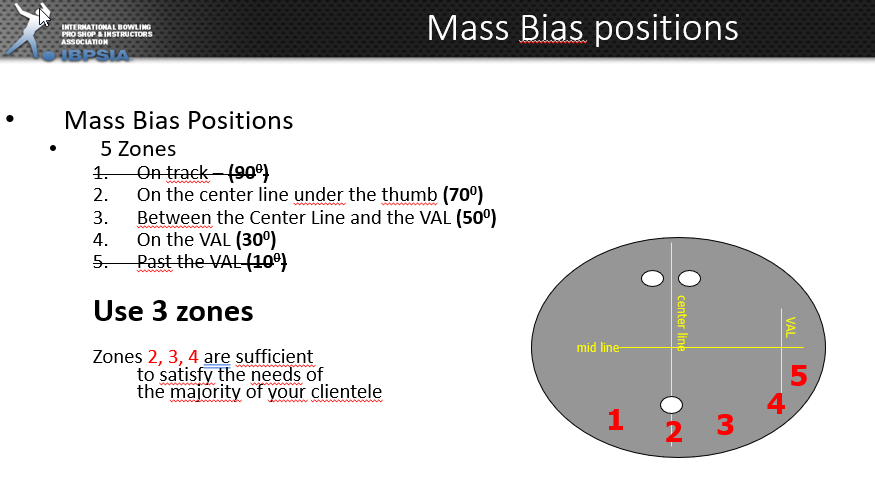
- Here the 3 zones recommended on the Mass Bias position :
? What is Pin-to-PAP Distance?
-
Pin: The marker on the ball indicating the top of the core.
-
PAP (Positive Axis Point): Your personal axis of rotation on the ball, unique to your release.
-
Pin-to-PAP Distance: The straight-line distance between your PAP and the pin.
? How Does Pin-to-PAP Distance Affect Ball Reaction?
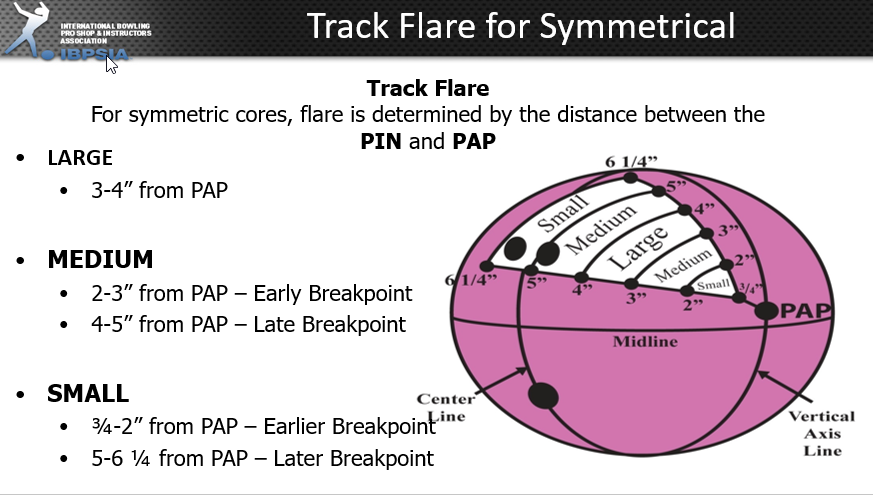
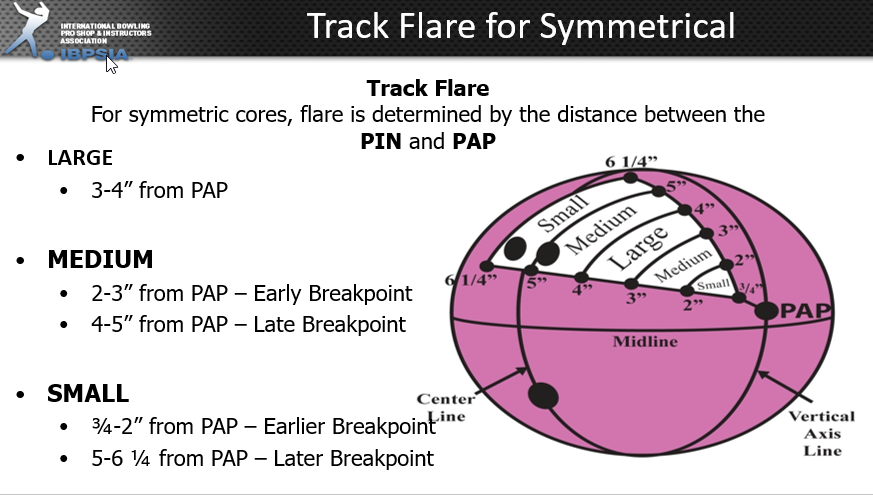
- Short pin-to-PAP distance (e.g., less than 3 3/8 inches): Places the core in a more stable position, leading to less track flare and an earlier, smoother roll.
- Medium pin-to-PAP distance (e.g., around 3 3/8 to 4 inches): Creates the most track flare and instability, resulting in a more aggressive reaction and a stronger hook. This distance is often considered the "max flare" position for symmetrical balls.
- Long pin-to-PAP distance (e.g., over 4 inches): Puts the core in a less stable position, causing the ball to hook later and roll longer down the lane. This can be useful for getting the ball to the pocket with more energy on specific lane conditions.
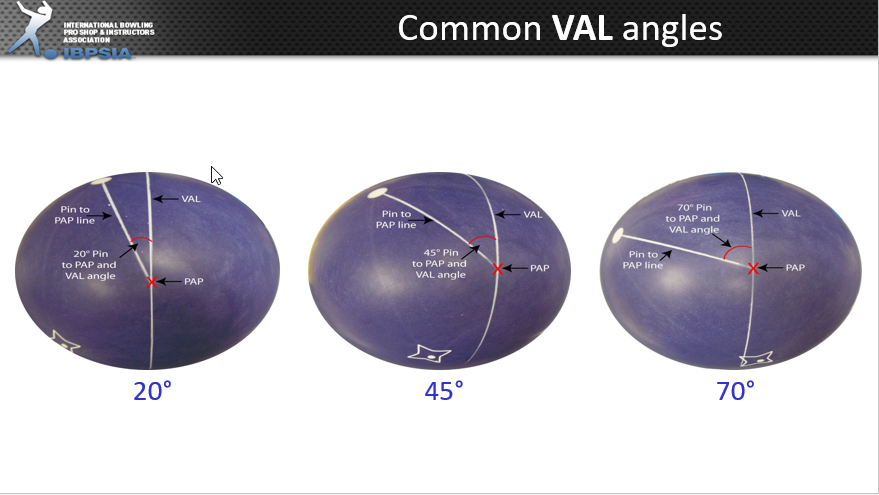
? What is the VAL Angle?
-
The VAL angle (Vertical Axis Line angle) is the angle between the line from your Positive Axis Point (PAP) to the Pin and the line from the PAP .
-
It’s a key that influences the shape and sharpness of the ball’s backend reaction.
? Effects of Different VAL Angles:
VAL Angle (degrees) Effect on Ball Reaction 25° or lower Sharper , more angular and agressive backend 30° to 45° Balanced backend with moderate angularity 50° or higher Smoother ,more controlled backend motion 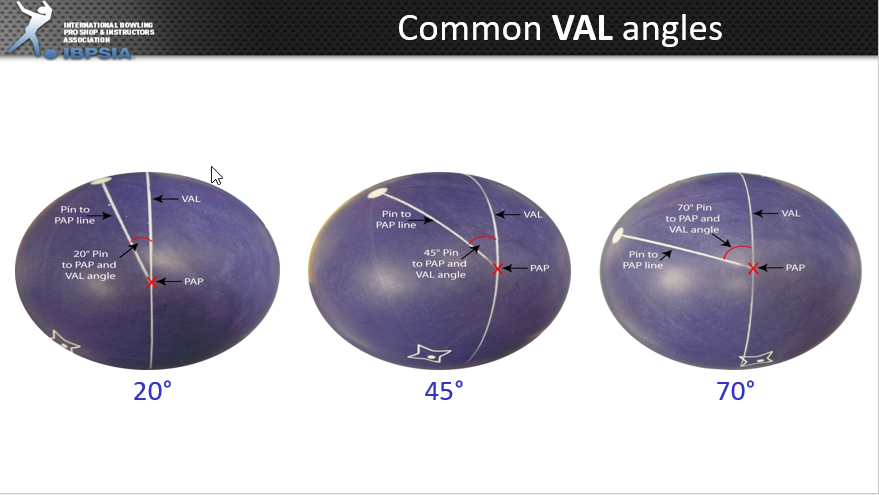
-
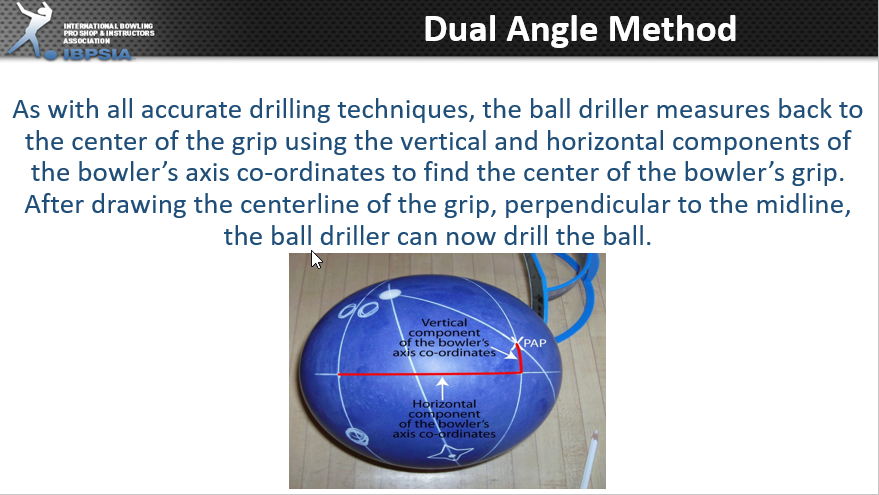
- Here the process in 8 steps how to create a Dual Angles layout:
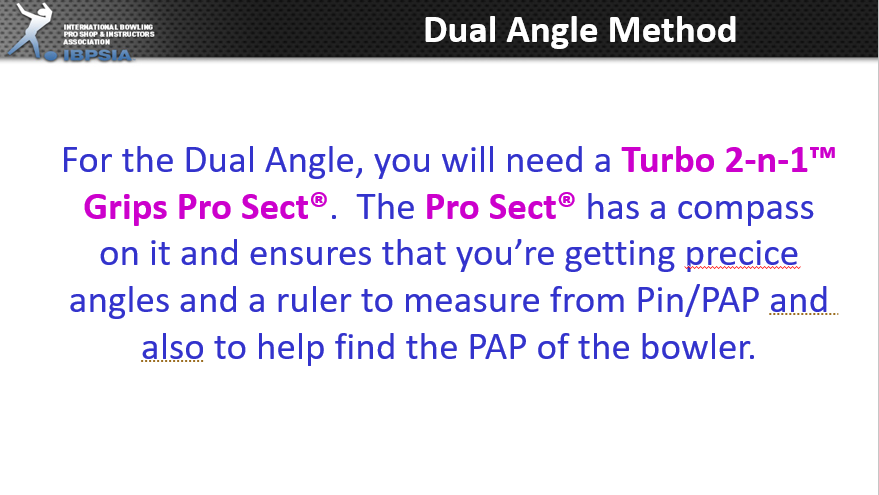
- STEP 1:
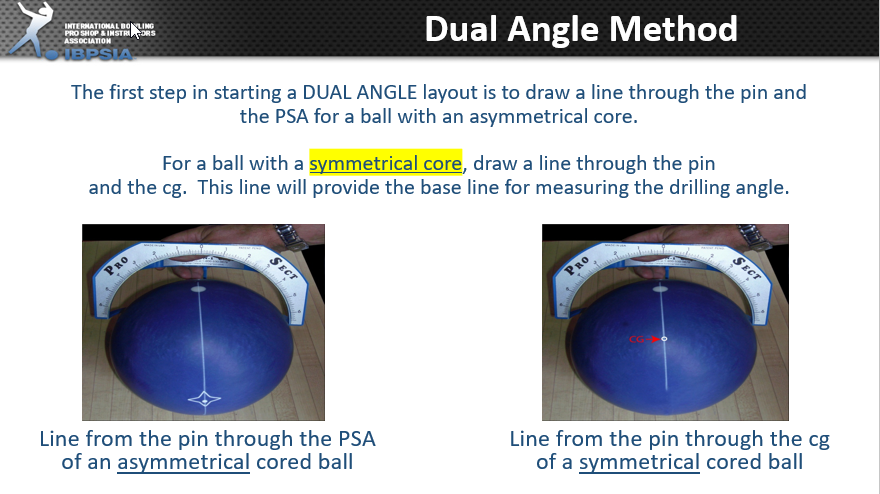
STEP 2:
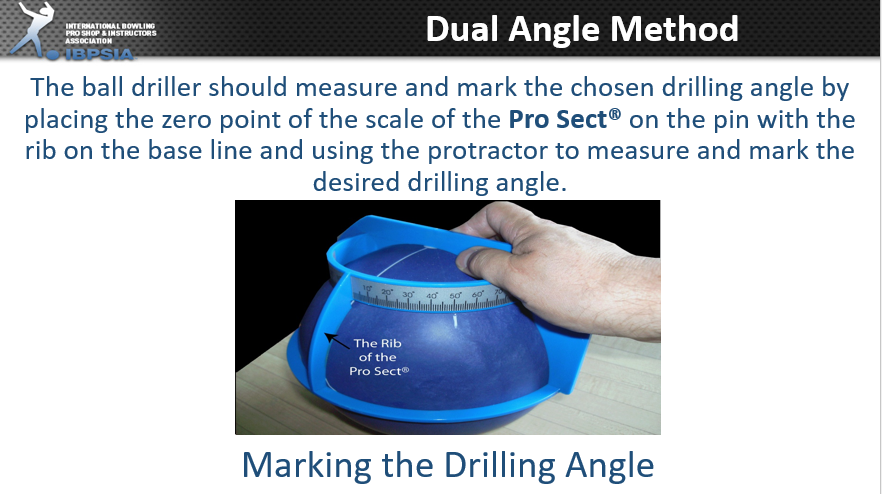
- STEP 3:
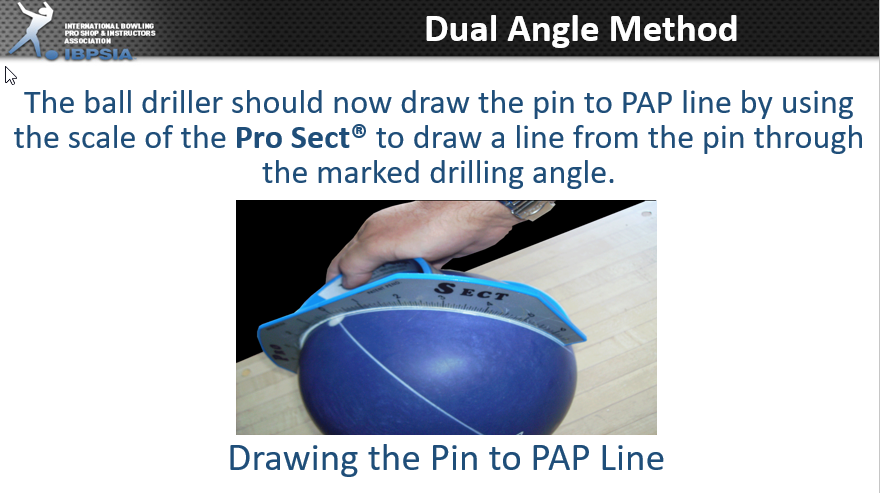
- STEP 4:
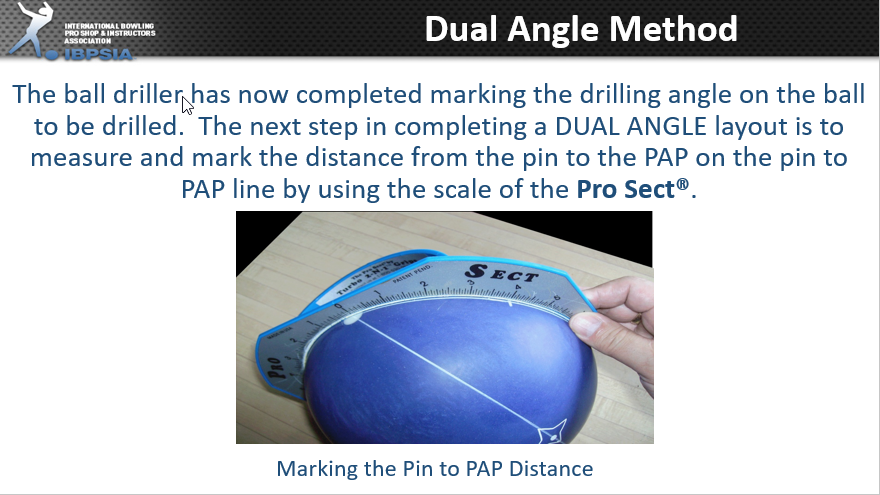
- STEP 5:
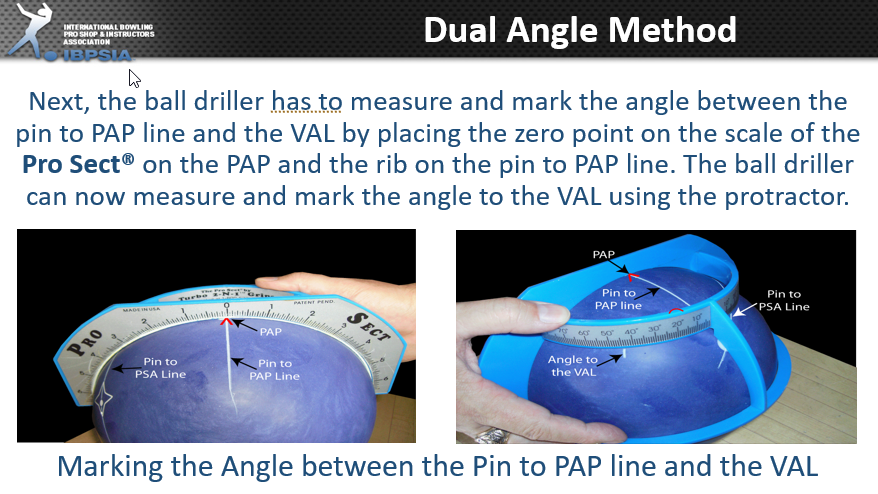
- STEP 6:
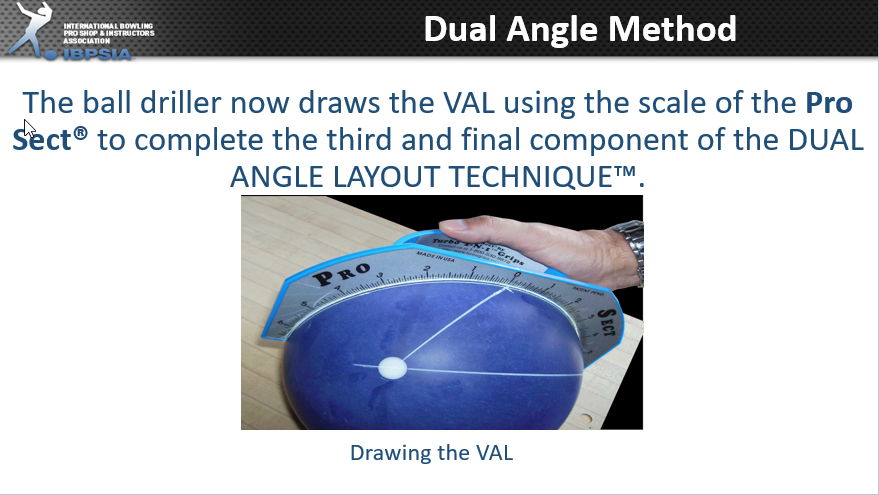
- STEP 7:
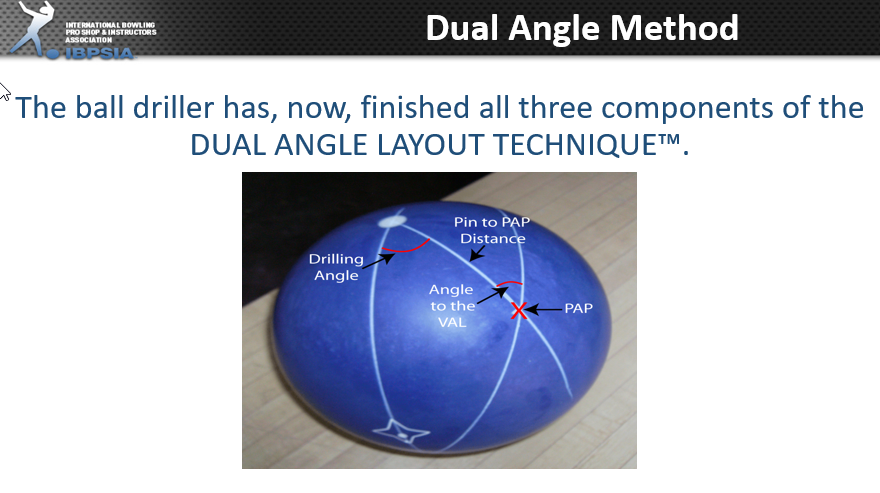
- STEP 8:
*This is an example of a layout based on a 5 x 1 PAP measurement. The holes can be positioned differently on the ball depending on your PAP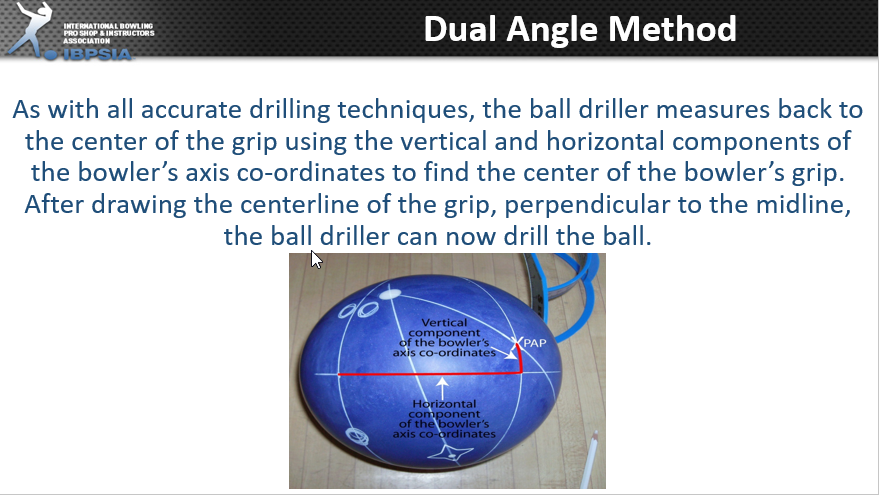
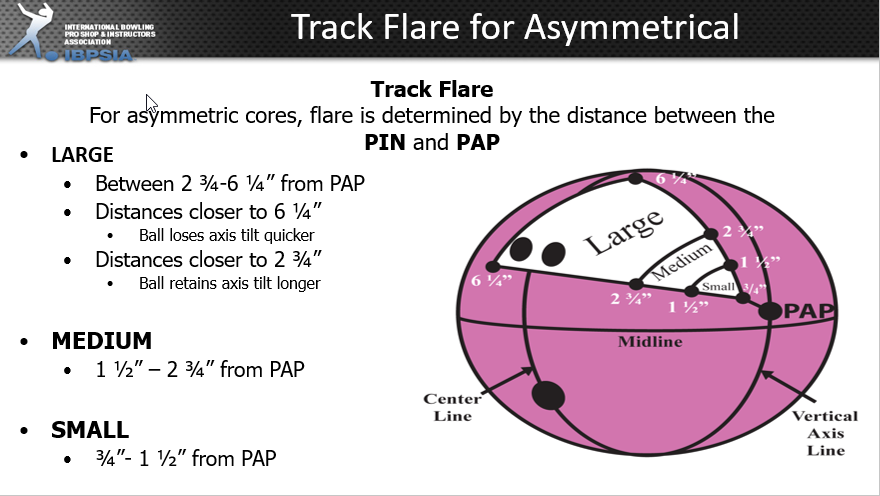
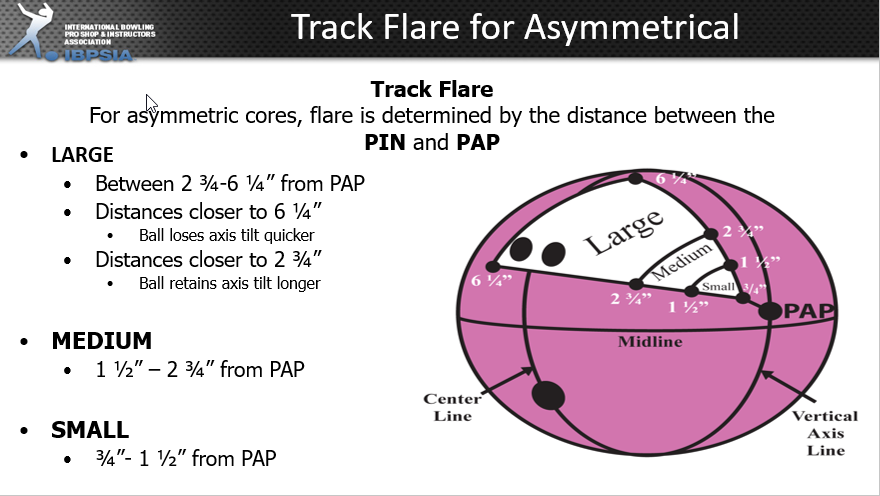
Take note for the track flare on Symmetrical and Asymmetrcial bowling :
-