Understanding all properties, composite of the bowling ball.
? Three Key Properties of a Bowling Ball
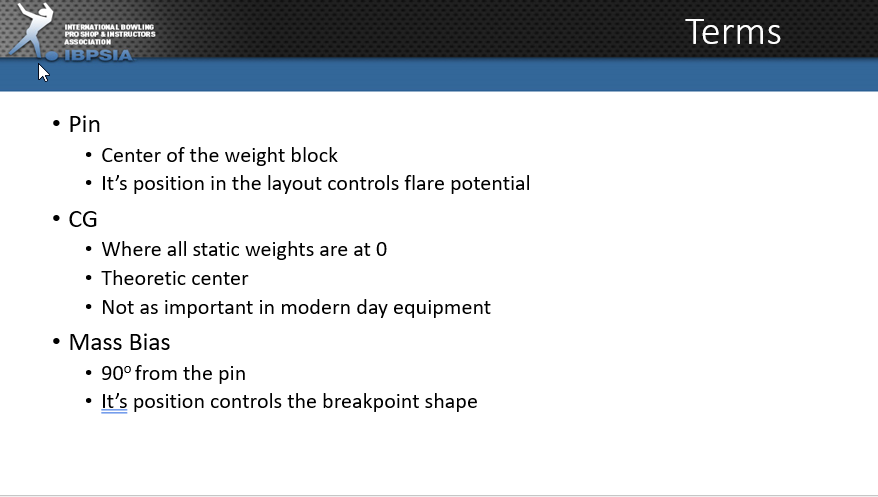
1. CG – Centre of Gravity
-
Definition: The CG marks the balance point of the ball's core. It’s usually indicated by a small dot or marking on the surface of the ball.
-
Function:
-
Helps determine the drilling layout.
-
Affects how the ball transitions through the skid, hook, and roll phases.
-
Closer to the grip, the reaction will be smoother.
-
Farther from the grip, it can create more flare potential (depending on the layout).
- With the new regulations regarding the balance hole, as well as today’s equipment, it has become less of an important factor than it used to be.
-
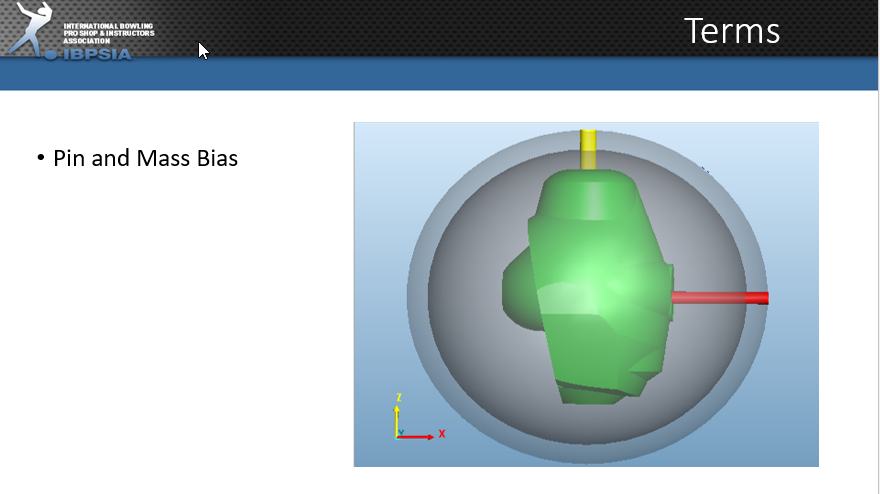
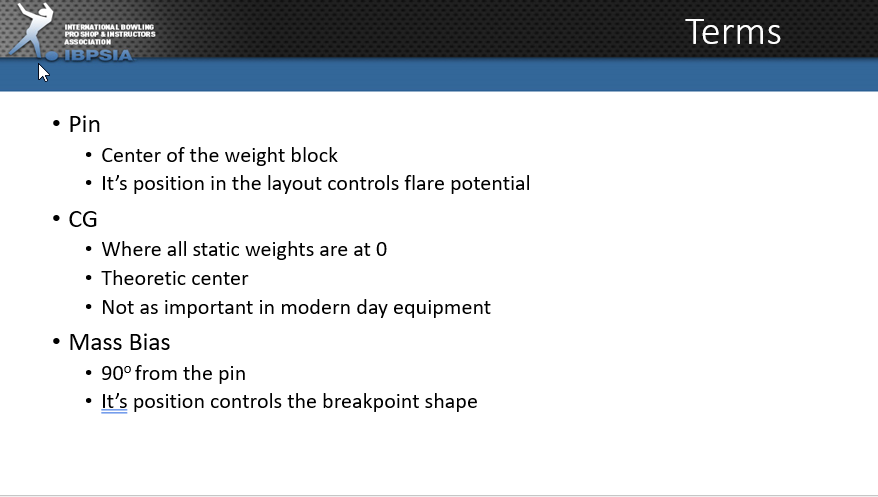
2. PIN
-
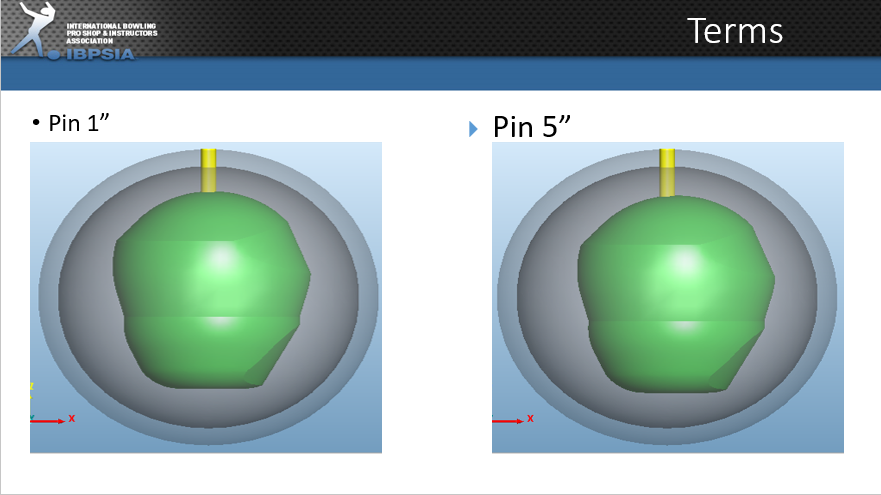
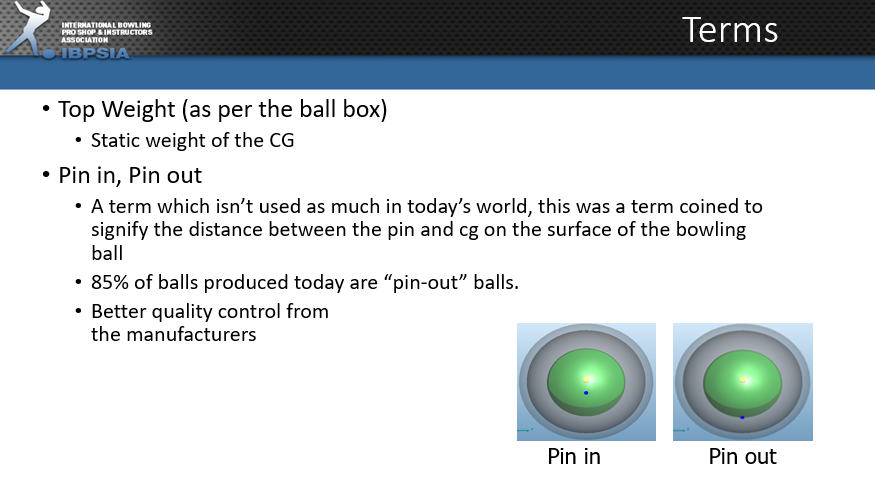
Definition: The PIN is the distance between the top of the core and the CG, shown as a small coloured dot on the ball.
-
Function:
-
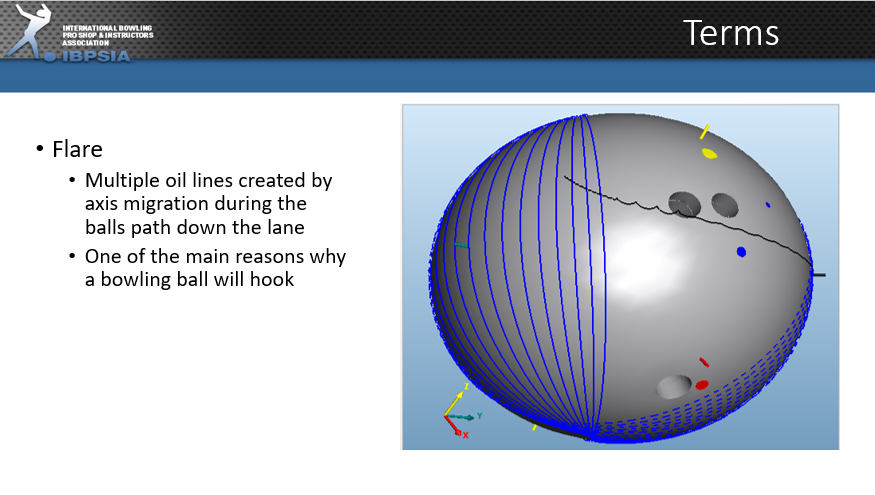
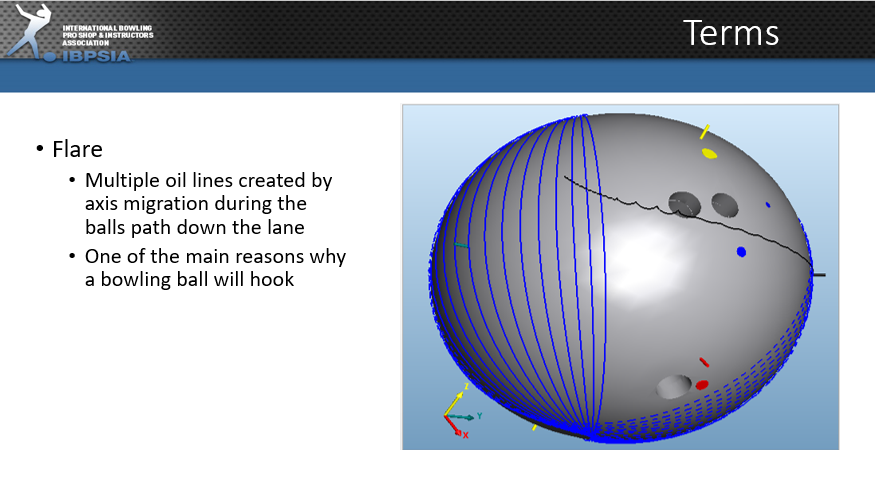
Affects the flare potential and length of the ball before it begins to hook.
-
A shorter PIN (e.g. 1–2") will create an earlier hook, more controlled motion.
-
A longer PIN (e.g. 4–5") will create more length and a sharper backend reaction.
-
-
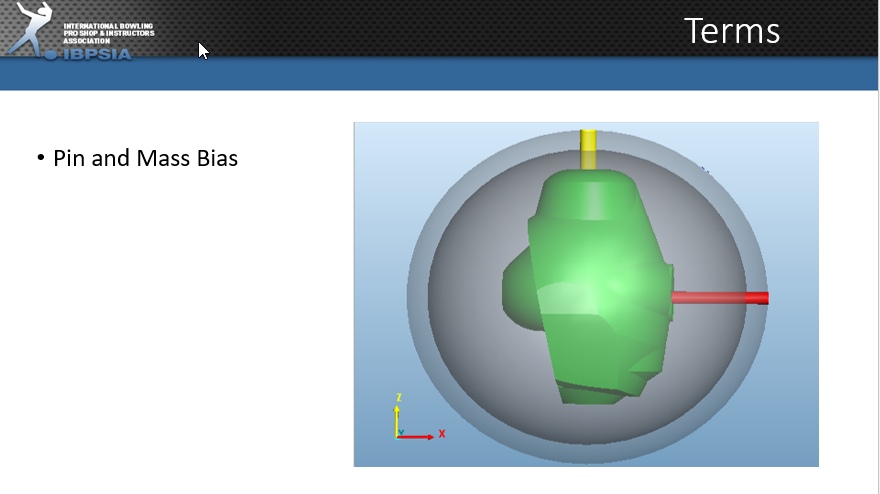
3. Mass Bias (MB)
-
Definition: Present in asymmetrical balls, it's the point where the core is imbalanced — usually marked with a symbol (e.g., a line, dot, or "MB" logo).
-
Function:
-
Controls the shape and sharpness of the hook, especially in the backend phase.
-
Crucial for advanced layouts — especially in high-performance balls.
-
Placement of the Mass Bias affects how quickly and how strongly the ball changes direction.
-
 Key takeaway
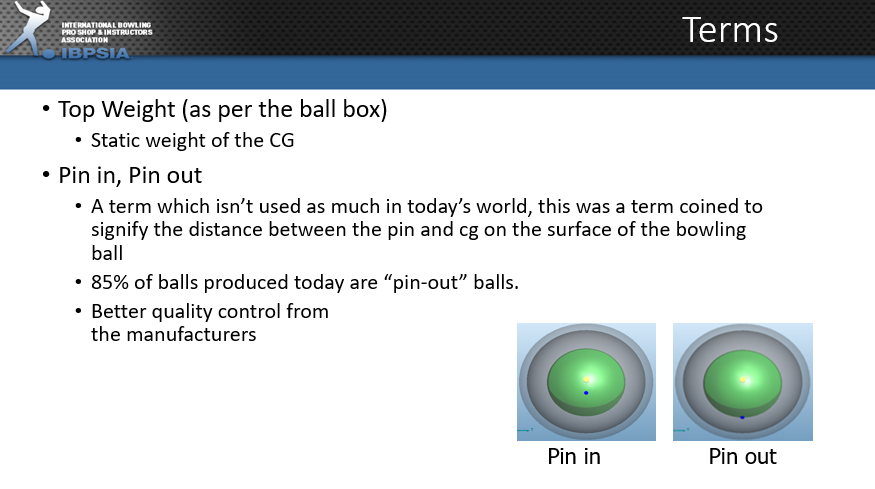
- The "pin in or out" refers to the orientation of the weight block, while "top weight" is a ball characteristic used to achieve the desired layout.
- The most important factor for performance is the layout, which is a combination of top weight, pin length, and mass bias location.
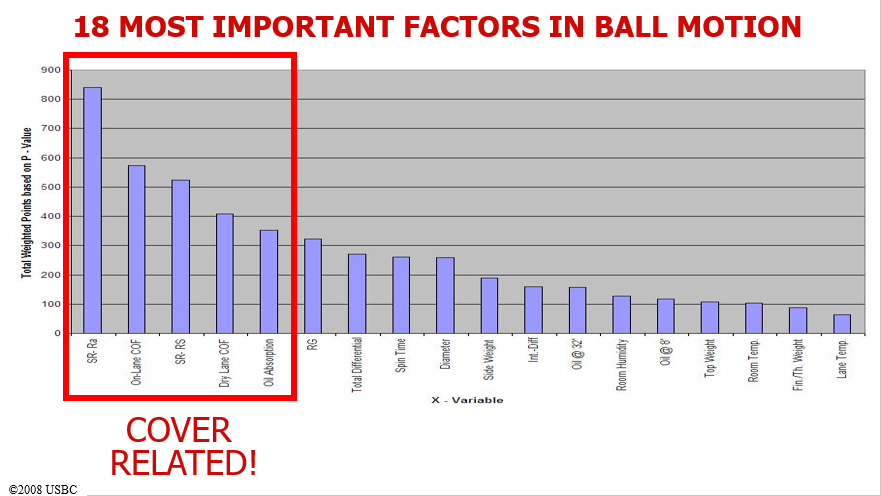
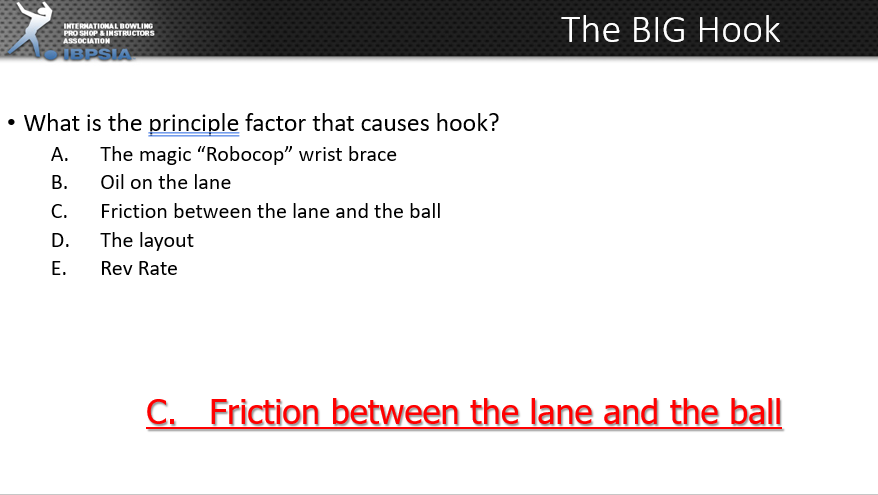
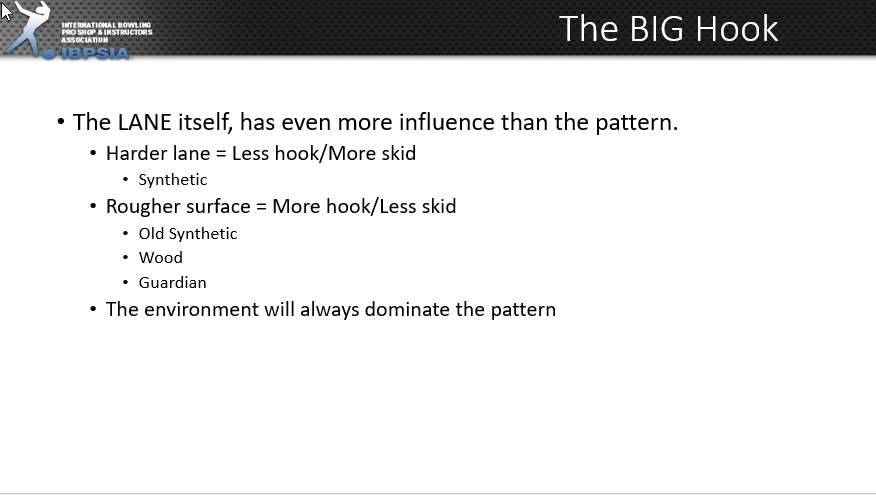
What are the different factors that influence the reaction of your bowling ball?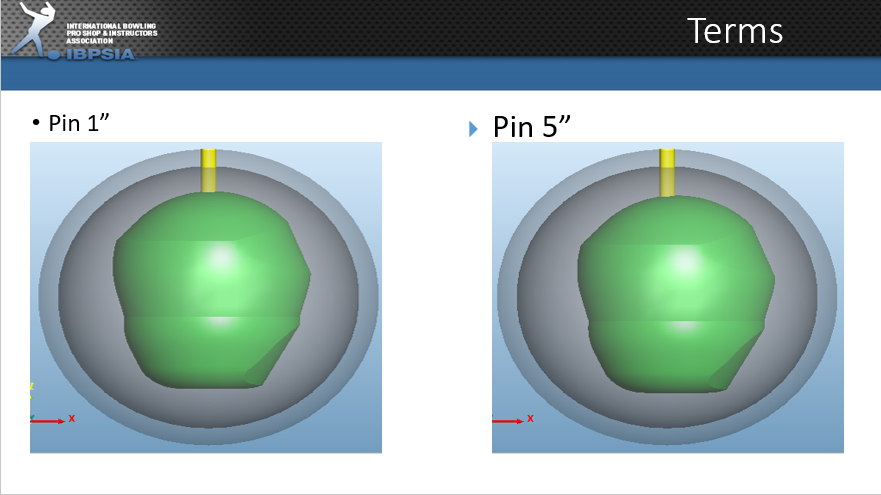
-
-
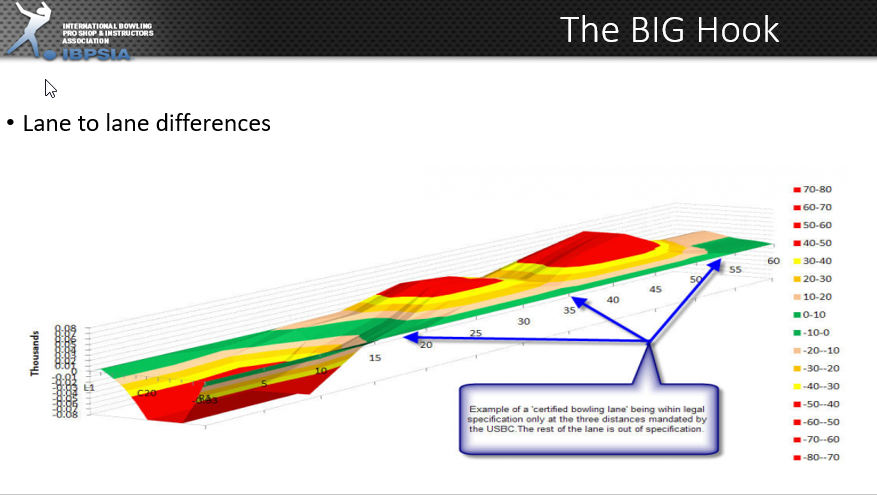
- Equipment Surface
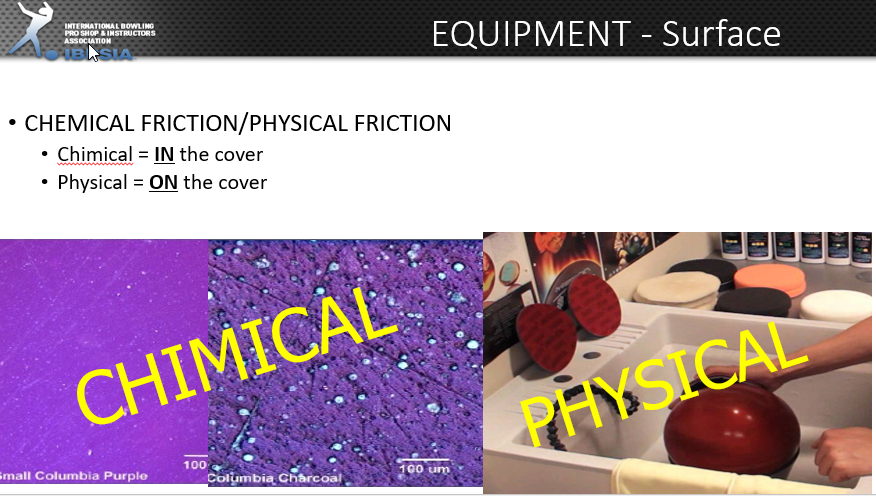
- These 18 factors work together to determine how a bowling ball behaves during its three motion phases: skid, hook, and roll.
-
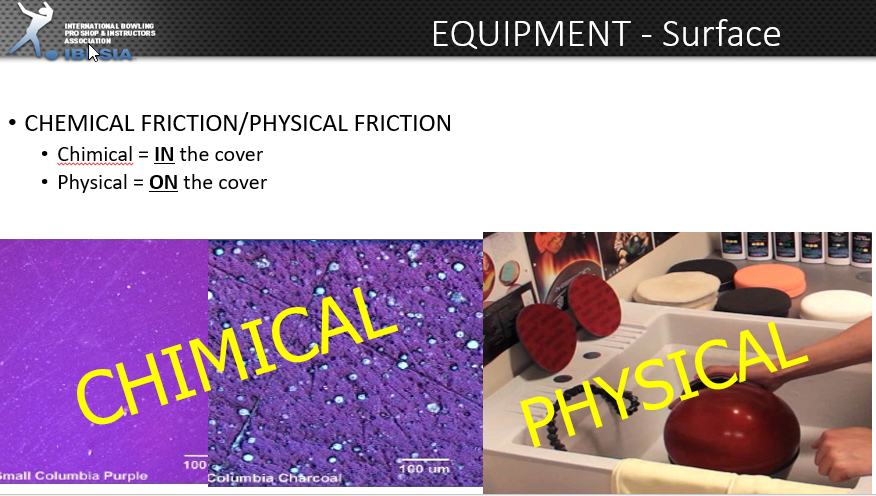
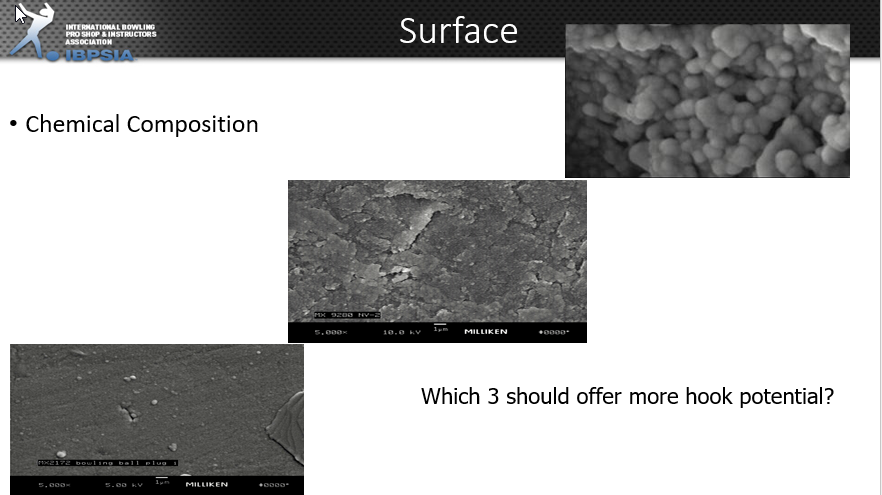
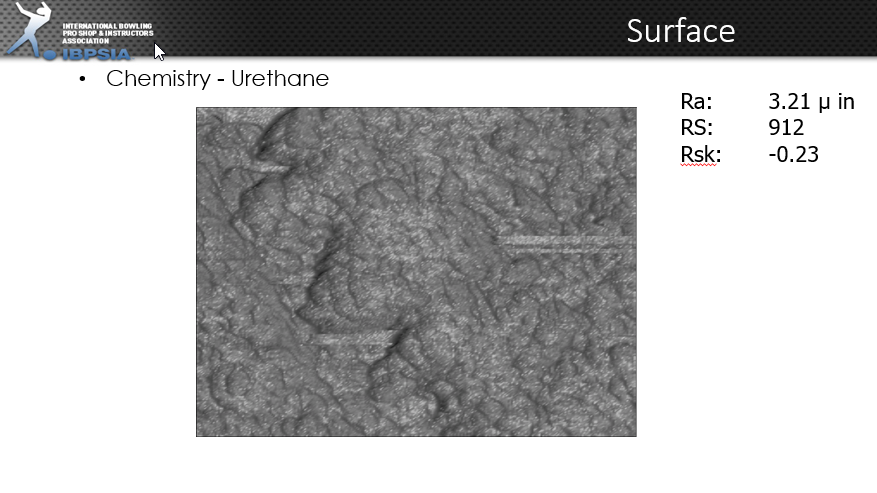
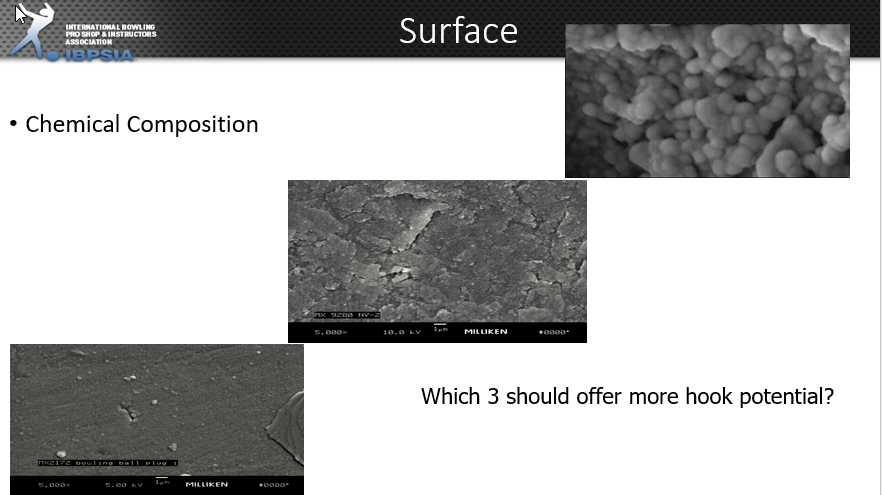
Surface and chemical omposition of the ball :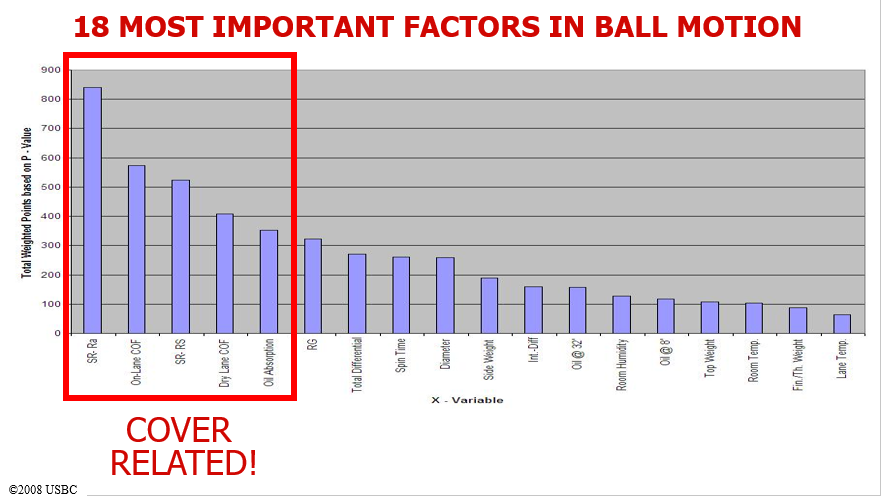
-
? Chemical Composition of Bowling Balls & Hook Potential
Here’s a comparison table showing the main chemical materials used in each type of bowling ball coverstock and how much hook potential each one offers.
? Comparison Chart – Chemical Composition vs. Hook Potential
Ball Type Main Chemical Composition Description Hook Potential Plastic (Polyester) Polyester resin (Polyethylene Terephthalate – PET) Smooth, hard surface with very low friction. Commonly used for straight shots and spare balls. ? Very Low Urethane Polyurethane (Created by reacting polyols with diisocyanates like MDI or TDI) Slightly porous, offers more traction than plastic. Known for a smooth, controllable arc. ?? Low to Medium Reactive Resin Modified polyurethane with reactive additives (plasticizers, curing agents, oil-absorbing resins) High friction, porous surface that absorbs oil, creating a strong backend hook. Most popular for league and competitive play. ??? High Particle (Proactive) Reactive resin infused with microparticles (ceramic, silica, etc.) Roughest surface, maximum traction in heavy oil conditions. Used mainly by advanced players. ???? Very High ? Hook Strength Ranking (from lowest to highest)
-
? Plastic – Minimal hook, best for straight throws or spare shooting
-
? Urethane – Moderate hook, offers control and predictability
-
? Reactive Resin – Strong hook, great backend motion
-
⚫ Particle – Maximum hook, ideal for heavy oil patterns (less common now)
-
? Key Properties of Polyurethane (Urethane) in Bowling Balls
Property Chemical Basis Effect on Performance Durability Strong carbon–nitrogen (C–N) and carbon–oxygen (C–O) bonds in urethane linkages Resists cracking and chipping under impact Low Oil Absorption Tight cross-linked polymer network Predictable motion on oily lanes Moderate Friction Less porous than reactive resin Smooth, controllable hook (not too aggressive) Hardness Controlled by polymer blend and curing Durometer typically 74–78D (harder than reactive resin) 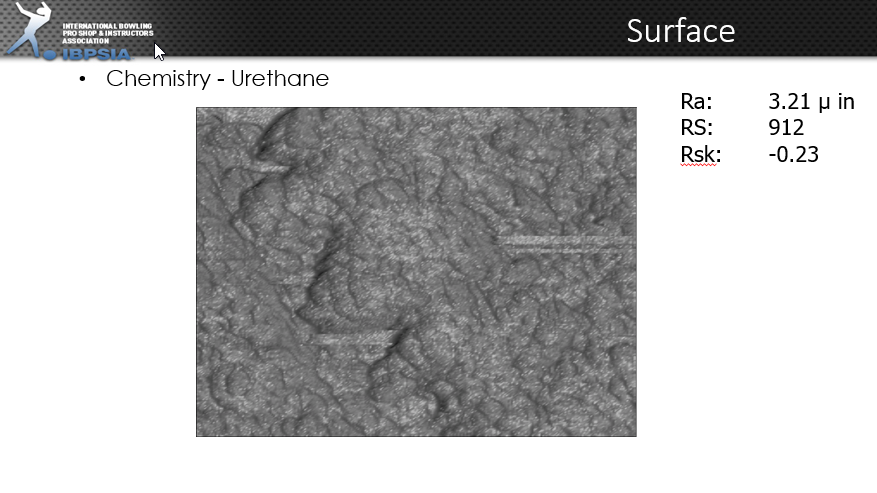
-
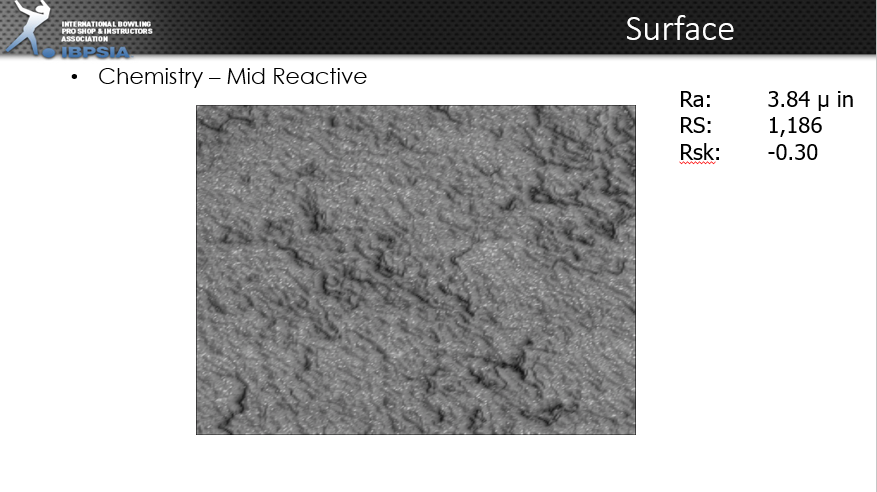
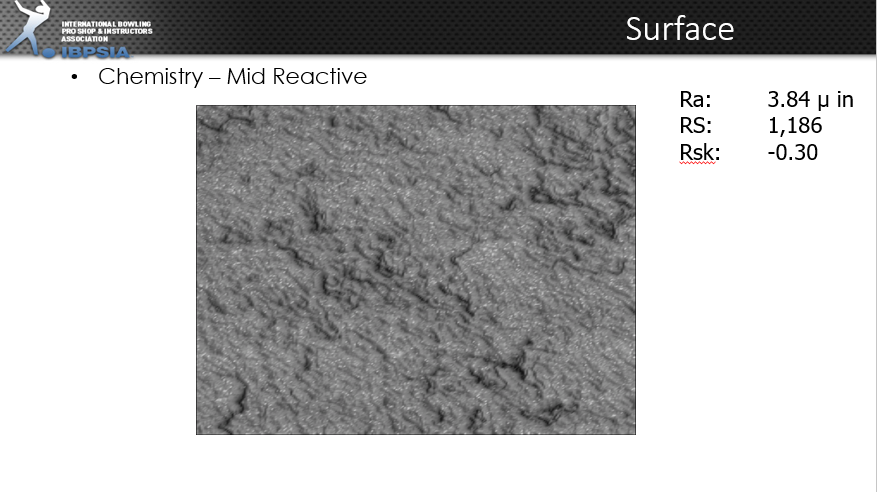
? Chemistry of Mid-Reactive Bowling Balls
What Is a Mid-Reactive Bowling Ball?
-
A mid-reactive bowling ball has a coverstock chemically designed to provide moderate friction and oil absorption on the lane.
-
It’s engineered to perform between low-reactive (slicker, less hook) and high-reactive (more aggressive hook) balls.
Chemical Composition
-
Base Polymer: Polyurethane Resin
-
The core polymer is polyurethane, created by reacting polyols (compounds with multiple hydroxyl groups, –OH) and diisocyanates (usually MDI or TDI).
-
This reaction forms urethane linkages (–NH–CO–O–) resulting in a durable, cross-linked thermoset polymer.
-
-
Reactive Additives
-
Mid-reactive balls contain moderate amounts of reactive resins and plasticizers.
-
These additives increase the porosity and oil absorption of the coverstock but to a lesser degree than high-reactive balls.
-
This balanced chemical mix creates enough surface “grip” for good traction without over-reacting.
-
-
Surface Finish / Texture
-
Chemically and physically, the surface has a medium level of micro-roughness (often achieved by sanding or polishing).
-
This finish exposes the coverstock’s reactive pores to the lane oil just enough to produce a controlled hook.
-
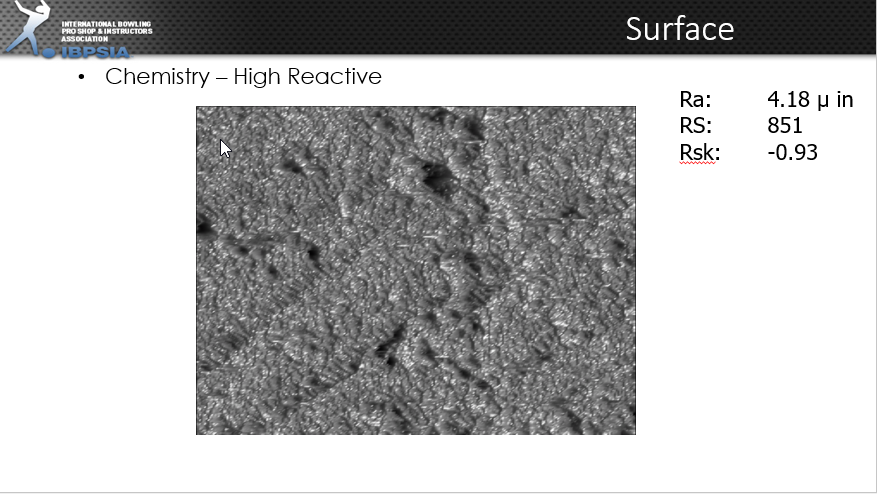
? Chemistry of High-Reactive Bowling Balls
What Does “High-Reactive” Mean?
-
High-reactive bowling balls have coverstocks formulated to maximize friction and oil absorption.
-
They create a strong hook motion, especially on medium to heavy oil lane conditions.
-
This is achieved through specific chemical and physical properties of the coverstock.
Chemical Composition
-
Base Polymer: Polyurethane Resin
-
Like other reactive balls, the base polymer is polyurethane, synthesized by reacting polyols with diisocyanates (MDI or TDI).
-
This creates a cross-linked thermoset polymer providing durability and elasticity.
-
-
Reactive Resin Additives
-
High-reactive balls contain higher concentrations of reactive additives and plasticizers compared to mid- or low-reactive balls.
-
These include specialized resin compounds that increase the porosity of the coverstock and its ability to absorb lane oil.
-
-
Surface Microstructure
-
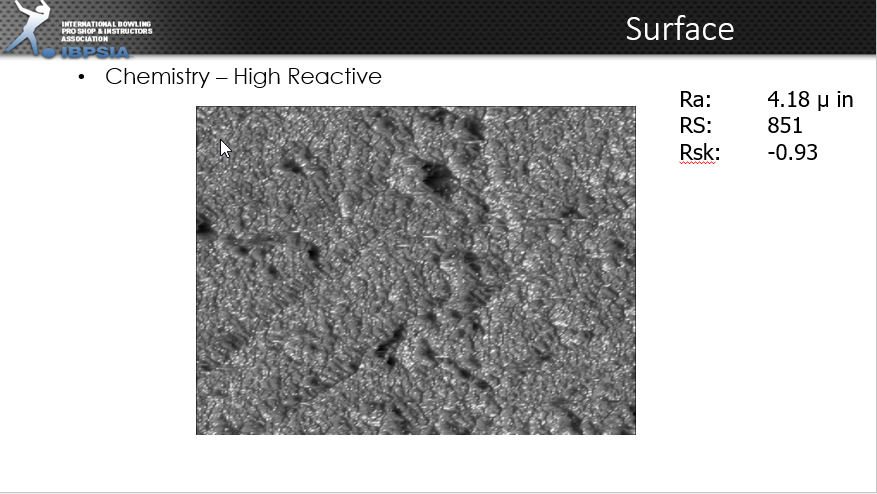
The coverstock surface is chemically engineered to have a highly porous microstructure.
-
This allows the ball to absorb more oil, increasing friction once it reaches the dry backend portion of the lane, resulting in a stronger hook.
-
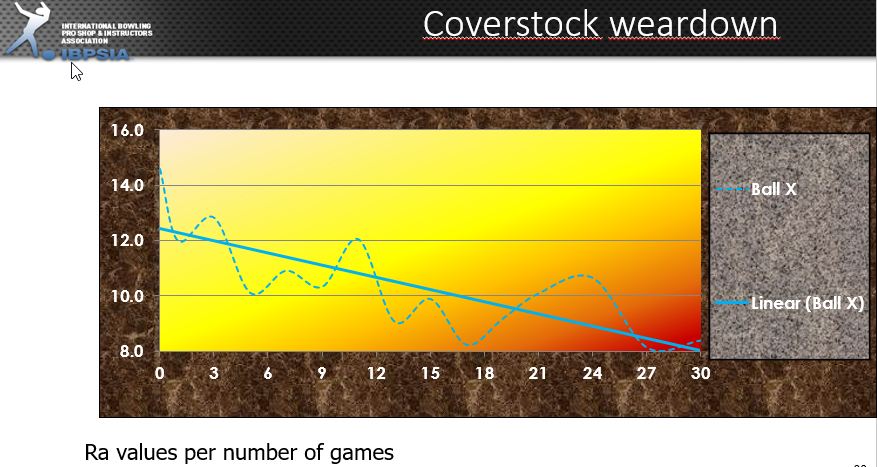
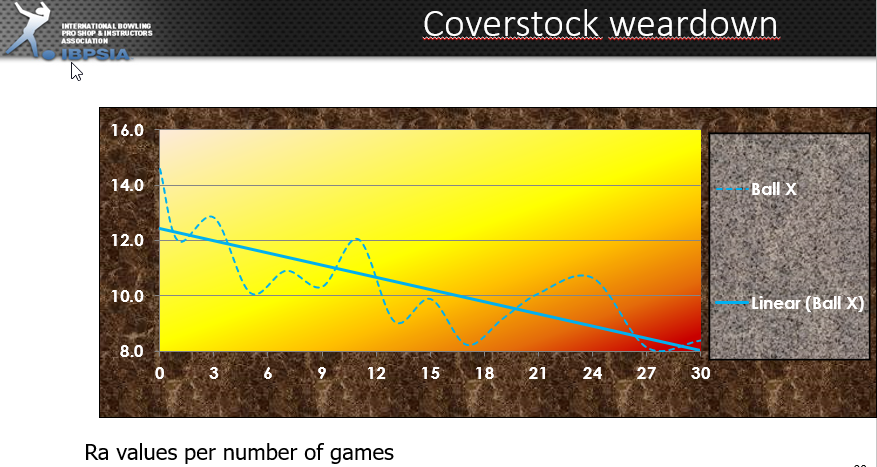
? Coverstock Wear-Down on Bowling Balls
What is Coverstock Wear-Down?
-
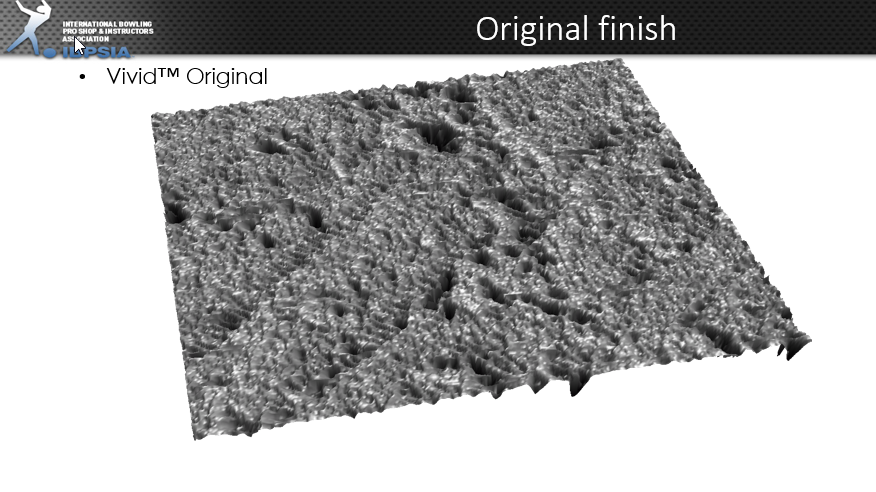
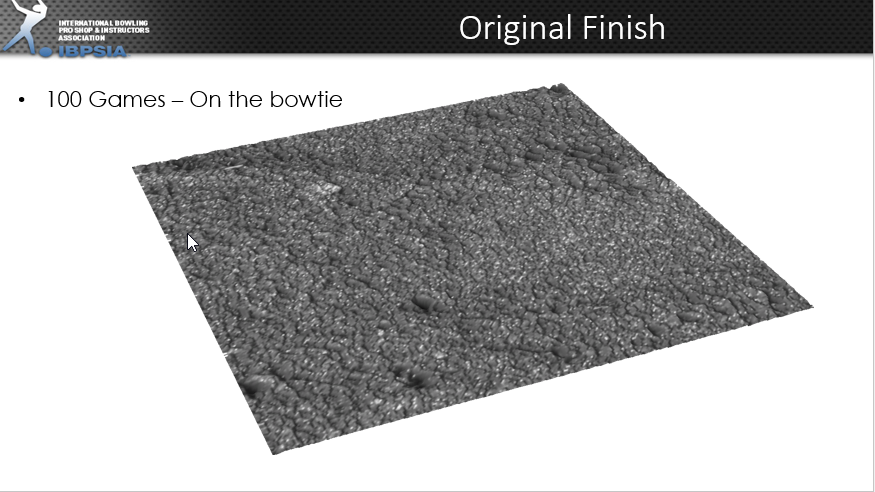
Coverstock wear-down refers to the gradual erosion, abrasion, or smoothing of the bowling ball’s outer shell (coverstock) surface after repeated use.
-
Over time, the coverstock loses its original texture, surface finish, and chemical properties that help it grip the lane.
Why Does Coverstock Wear Down?
-
Friction with Lane Surface
-
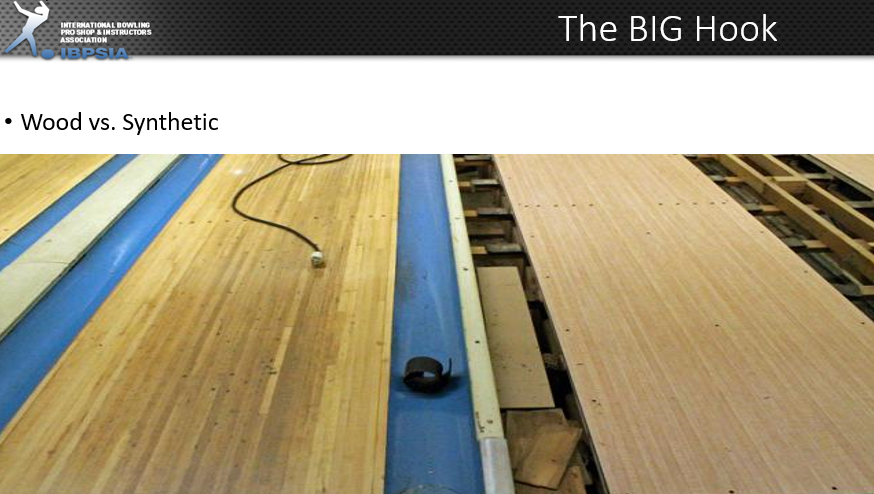
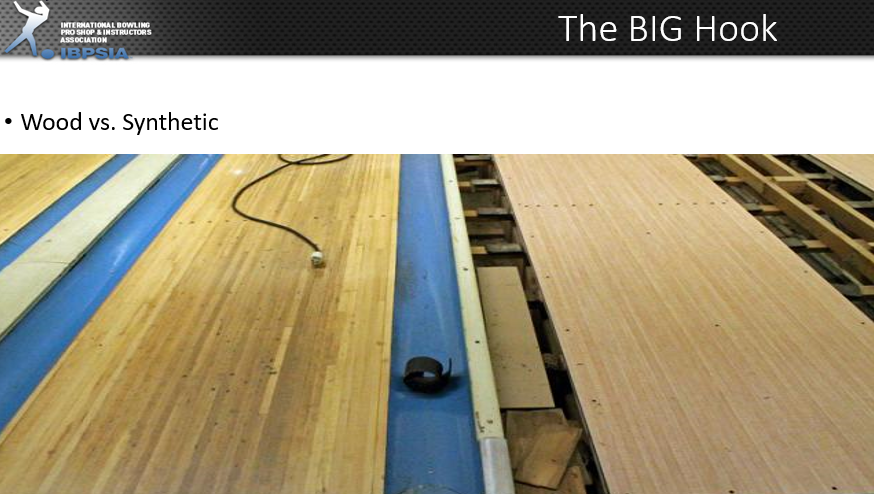
Constant contact with the lane, especially on abrasive synthetic or wood lanes, causes microscopic scratches and smooths rough surfaces.
-
-
Cleaning & Maintenance
-
Repeated cleaning with harsh chemicals or improper maintenance can degrade the surface.
-
-
Impact with Pins and Gutter
-
Hitting pins hard or rolling into gutters can cause chips, scratches, and dents.
-
-
Heat & Chemical Changes
-
Heat generated by friction and chemical reactions with lane oils or cleaners can alter the polymer structure over time.
-
How Does Wear-Down Affect Ball Performance?
Effect Impact on Ball Reaction Loss of Surface Texture Reduced friction with lane → less hook potential Smoother Surface More skid → ball slides longer before hooking Decreased Porosity Less oil absorption in reactive balls → weaker backend reaction Cracks or Chips Inconsistent ball roll, potential ball damage
Signs You May Need to Resurface or Replace Coverstock
-
Noticeably less hook despite similar lane conditions
-
Visible shiny or slick patches on the ball surface
-
Chips or deep scratches that affect ball roll
-
Ball feels “dead” or doesn’t respond like it used to
Maintenance Tips to Minimize Wear-Down
-
Regular cleaning with proper bowling ball cleaners after each session
-
Avoid harsh chemicals that damage the polymer
-
Periodic resurfacing or polishing by a pro shop to restore texture
-
Use multiple balls to spread out wear on different coverstocks
-
-
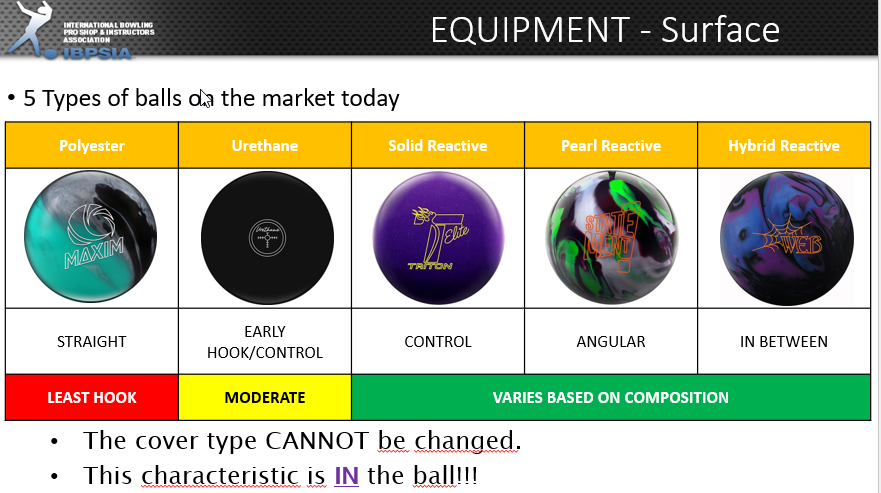
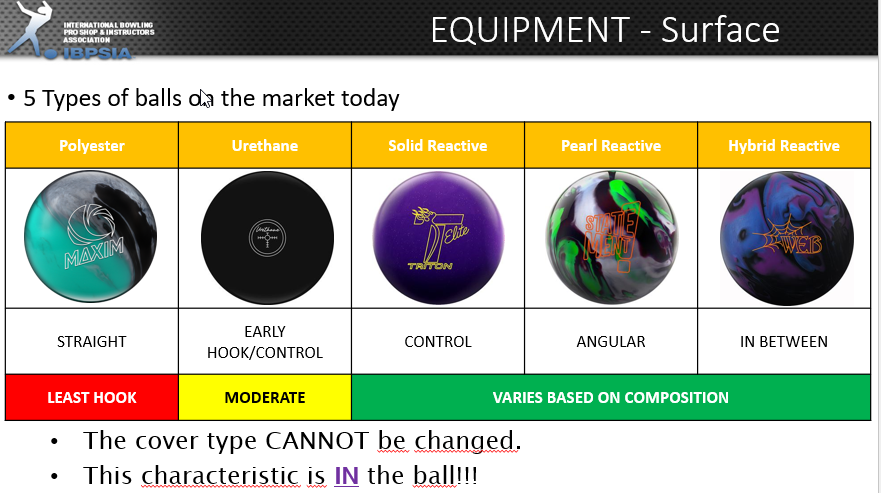
- Here the all 5 type of characteristic of bowling ball in the market :
-
1. Plastic / Polyester Coverstock
What it is & when to use it:
-
Smooth, low‑friction surface, so minimal hook.
-
Great for beginners, straight shots, or spare‑balls because it goes fairly straight and predictably.
-
Less suited for heavy hook or oily lane conditions.
2. Urethane Coverstock
What it is & when to use it:
-
More friction than plastic, so it gives you more hook potential while still being controllable.
-
Often a good transition ball for bowlers moving from straight shots toward more hooking style.
-
Works well on lanes with medium to dry oil conditions.
3. Reactive Resin Coverstock
What it is & when to use it:
-
Covers a big performance space: made of porous resin, absorbs some oil, and offers substantial hooking power.
-
There are sub‑types: Solid Reactive, Pearl Reactive, Hybrid Reactive (mix of solid+pearl) — each with different behaviour.
-
Best for bowlers who are more experienced and/or lanes have medium to heavy oil.
-
The difference:
-
Solid = stronger hook earlier (good for heavier oil).
-
Pearl = more length then sharper backend.
-
Hybrid = somewhere in between, good versatility.
-
-
-
What is surface roughness?
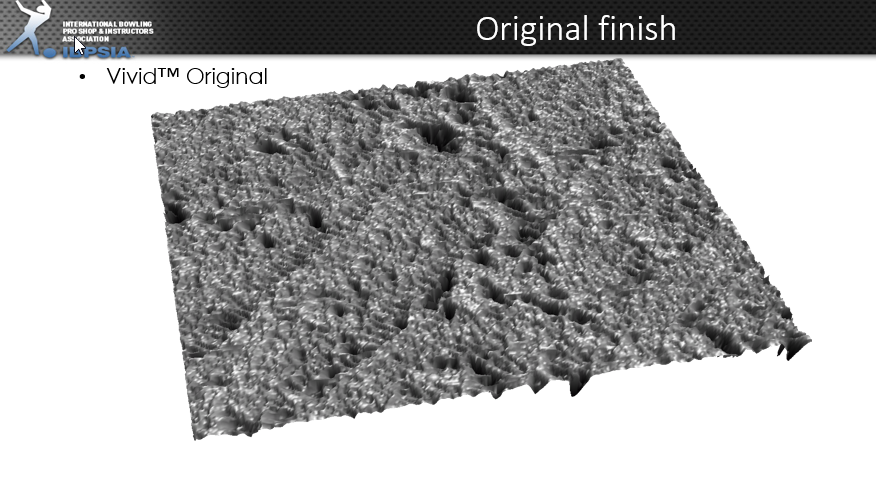
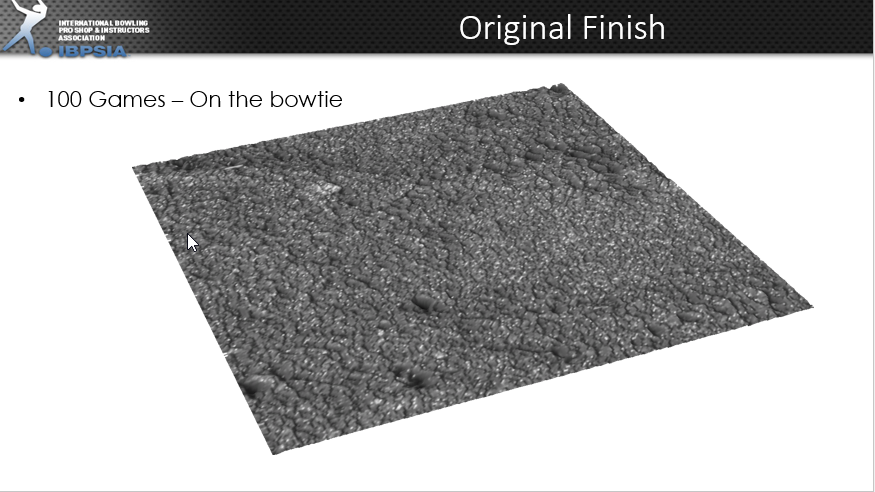
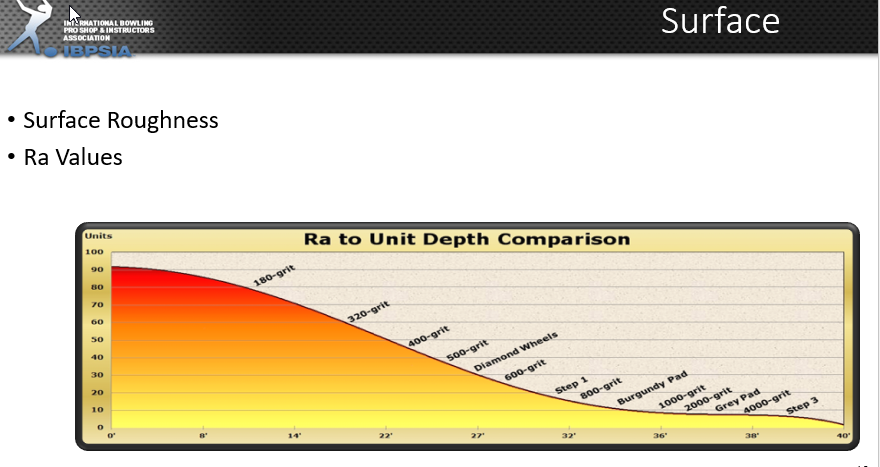
Surface roughness refers to the microscopic peaks and valleys (texture) on a ball’s coverstock. Two common metrics:
-
Ra = the average height of peaks/valleys.
-
Rs = the spacing/distribution of peaks and valleys.
According to the United States Bowling Congress (USBC) Equipment Specification, the surface roughness Ra of a certified bowling ball must not exceed 65 μin (micro‑inches), and the average across a weight class cannot exceed 50 μin.
One study found reactive coverstock balls had about 1.5× the roughness (measured as “Sa”) of polyester balls.
So, roughness is a real measurable property and has been shown to be a key factor in how the ball behaves.
Why surface roughness matters: performance effects
Here are the major performance effects of altering surface roughness:
Rougher surface (more texture)
-
Increases friction between the ball cover and the lane surface, especially in the oil front end.
-
Means the ball tends to hook earlier (i.e., it begins its transition from skid to hook sooner) because it “grips” the oil/wood sooner
-
Best suited for heavier oil conditions (where you need the ball to read the lane sooner).
Smoother surface (less texture)
-
Less friction up front; the ball will tend to skid farther before hooking.
-
The hook will be delayed (later breakpoint) and often sharper down‑lane (depending on cover).
-
Best when lanes are drier, or you want more skid and backend roll rather than early hooking.
Lifecycle and maintenance
-
Over time and use, the ball’s surface can become smoother (due to lane machine contact, ball returns, oil absorption) and thus lose “grip” / hooking potential.
-
Oil absorption in the cover pores also affects performance — once the pores fill, the ball doesn’t grip as well.
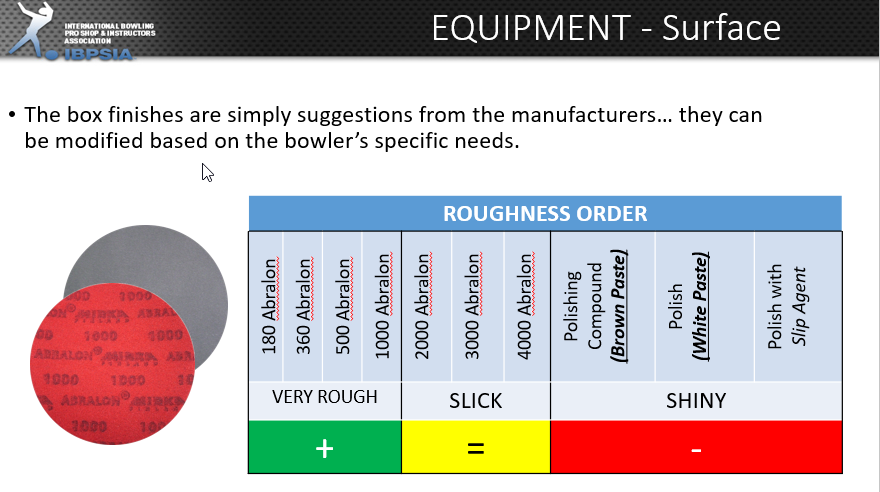
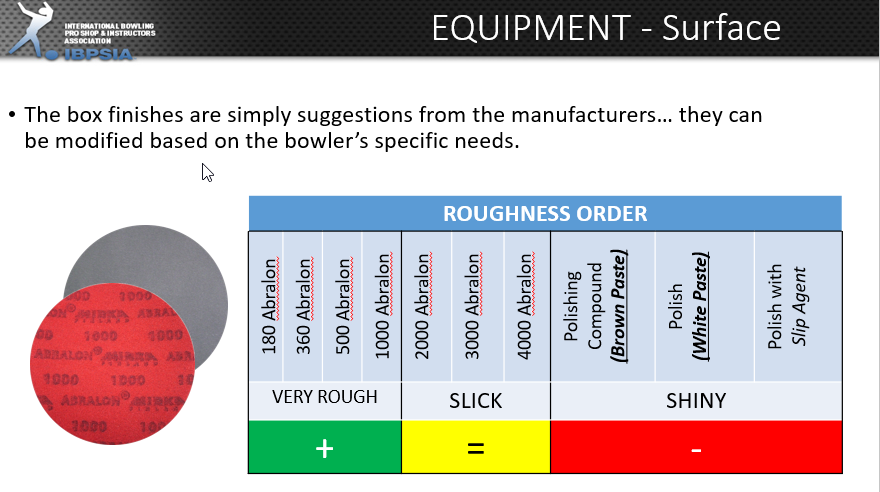
Comparison table: surface finishes and their effects
Here’s a quick comparison of how different finishes (grit levels / polish states) tend to behave. These are general guidelines (actual result will depend on coverstock chemistry, core, layout, lane conditions).
Finish / Roughness Level Typical Grit / Treatment Effect on Lane Ideal For Very Rough 500–800 grit sanding (or equivalent) Highest friction → earliest hook → less skid Heavy oil patterns Medium Rough / Sanded ~1000–2000 grit Balanced friction/skid → medium hook Medium oil or mixed conditions Smooth / Polished 3000–5000 grit or mirror polish Lower friction → more skid → delayed hook Dry lanes, when you want skid Very Smooth / High Gloss Dragon polish, factory gloss + polish Minimal front end friction → long skid Dry lanes, spare ball, control 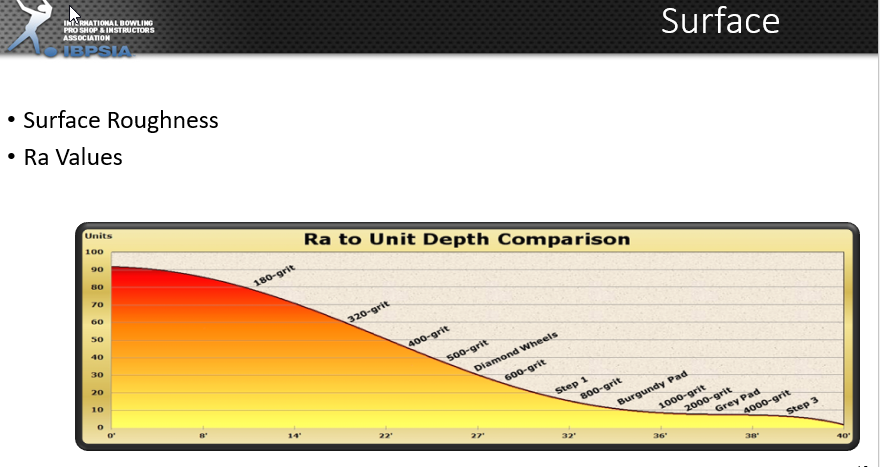
What is RG in Bowling?
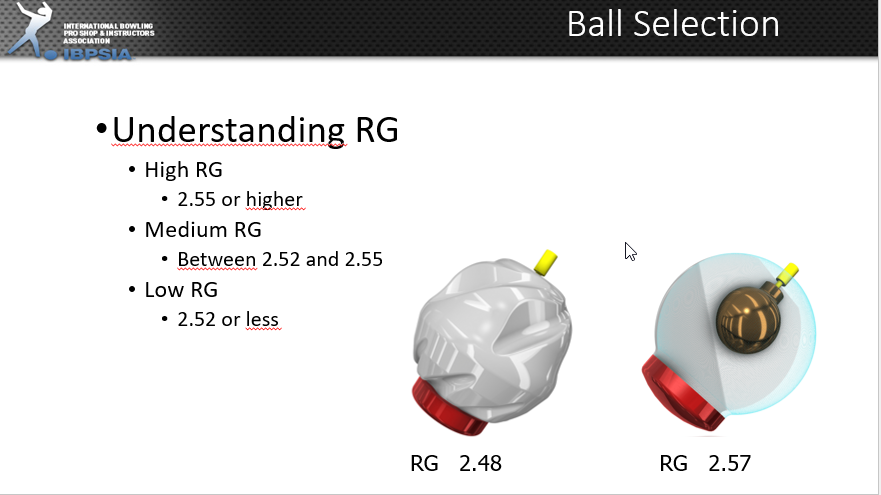
RG (Radius of Gyration) is a measurement that describes how the mass inside a bowling ball is distributed.
-
It’s not about weight, but how that weight is positioned relative to the center of the ball.
-
The number (typically between 2.46 and 2.80 inches) gives insight into how soon the ball starts to rotate when it rolls down the lane.
Think of it like a figure skater:
-
Arms tucked in = spins faster (like a low RG ball).
-
Arms extended = slower spin (like a high RG ball).
? RG Number Ranges and What They Mean
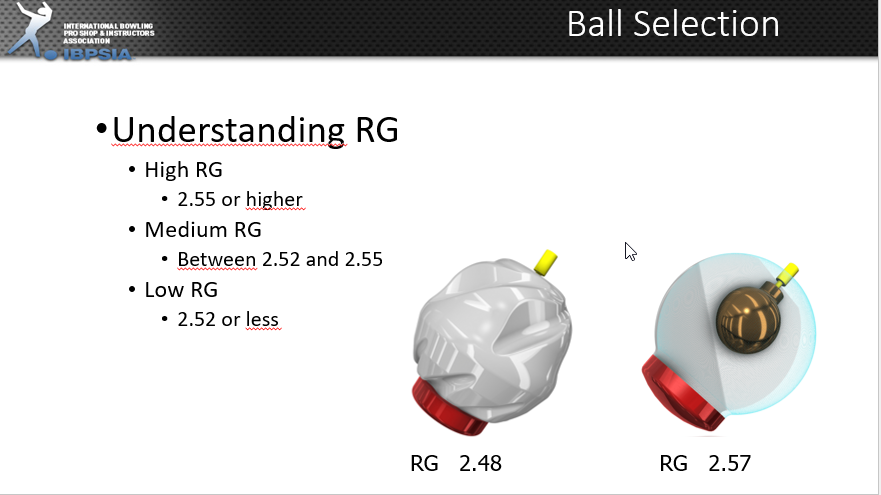
RG Range Hook Timing Reaction Style Ideal Use Low RG (2.46–2.50) Early roll Reads lane early, smooth arc Heavy oil, early hook needed Mid RG (2.52–2.55) Balanced timing Controlled motion, versatile Medium oil, all-around conditions High RG (2.55 to 2.80) Late roll Longer skid, sharp backend Dry lanes, late hook, backend angle ✅ What is RG?
-
RG measures how far from the axis of rotation the ball’s mass is (effectively) concentrated.
-
In bowling-ball terms, a lower RG means mass is more toward the center of the ball; a higher RG means more mass is toward the coverstock/surface.
-
The governing body United States Bowling Congress (USBC) defines RG values for certified balls in the range of approximately 2.460″ to 2.800″.
-
In simple analogy: imagine a figure skater. When their arms are pulled in (mass closer to centre) they spin faster — that’s like a lower RG. When their arms are extended (mass farther out) they rotate slower — that’s like a higher RG.
? How RG affects ball reaction
Here’s how RG influences the motion of the ball on the lane:
-
Low RG ball: Mass is more central, so the ball will rev up earlier, meaning it will start hooking sooner. Good for heavy oil conditions where you want the ball to engage friction earlier.
-
Medium RG ball: Balanced; picks up its hook mid-lane. Good all-rounder for many conditions.
-
High RG ball: Mass is farther out, so the ball will skid longer before hooking, conserving energy for the back end of the lane. Good for drier lanes where you need the ball to go further before turning.
? RG Ranges & What They Imply
Here are some typical ranges and what they usually mean:
RG Range Ball Behavior Best For 2.52 or less Low RG → earlier roll/hook Heavier oil, needing early motion between 2.52-2.55 Medium RG → moderate skid + roll Versatile conditions 2.55 or higher High RG → longer skid, later hook Dry lanes, need more backend action Also note: RG is only one of the specs — “differential” (difference between max RG and min RG in various axes) influences flare potential (how much the ball rolls and transitions) which also matters a lot.
? How to Use RG When Selecting a Ball
When you’re selecting a ball, consider these steps:
-
Check lane conditions: Are they oily? Dry? Medium?
-
Match RG to lane:
-
Oily: consider lower RG (to engage earlier)
-
Dry: consider higher RG (so the ball doesn’t hook too early)
-
-
Consider your style: Speed, rev rate, finger/hand release all matter. If you generate a lot of revs, you might want a higher RG to delay the roll. If you’re lower revs, a lower RG might help engage earlier.
-
Coverstock + core + drilling layout: RG is part of the story, but surface (coverstock) and drilling/layout also heavily affect how the ball performs.
-
Check Differential: A ball with low RG but very high differential might hook very aggressively—may be too much for certain lane/dryer conditions.
? What Is Differential?
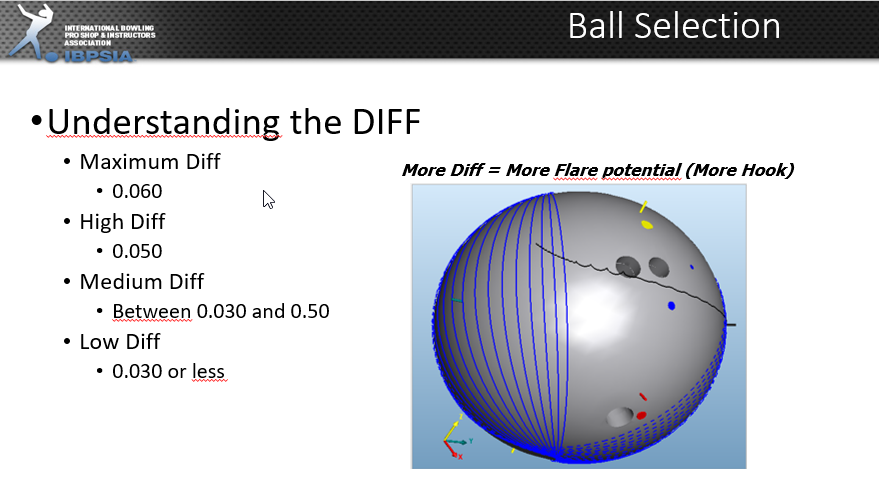
Differential measures the difference between a bowling ball’s maximum and minimum RG values — essentially, how unevenly the weight is distributed inside the ball.
-
High differential = greater difference between axes of rotation → the ball flares more and hooks harder.
-
Low differential = smaller difference → less flare, smoother and more controlled motion.
Differential Range Flare Potential Ball Reaction Typical Use 0.030 or lower Low Smooth, predictable motion Drier lanes, control shots 0.030 & 0.050 Medium Balanced hook potential Medium oil, versatile patterns 0.050 or higher
max 0.060
High Strong backend hook Heavy oil, strong motion 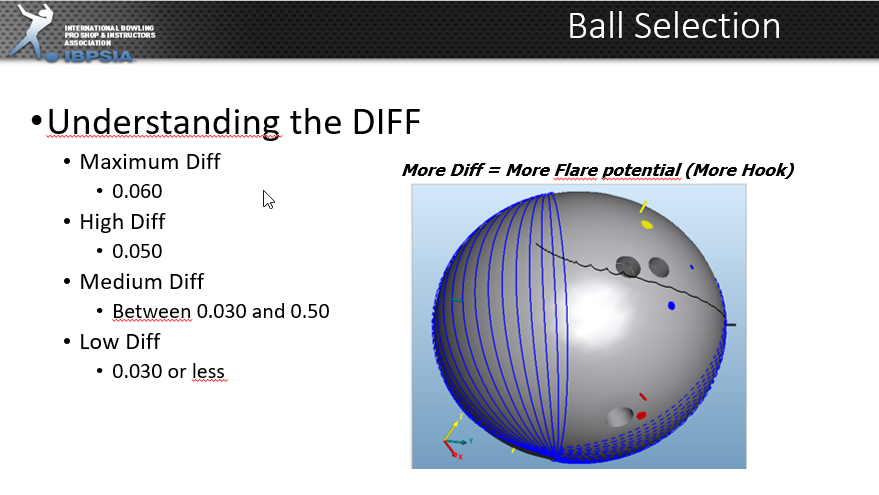
-
-
-
-
-
-
-
-