Understanding the properties of the ball
? Three Key Properties of a Bowling Ball
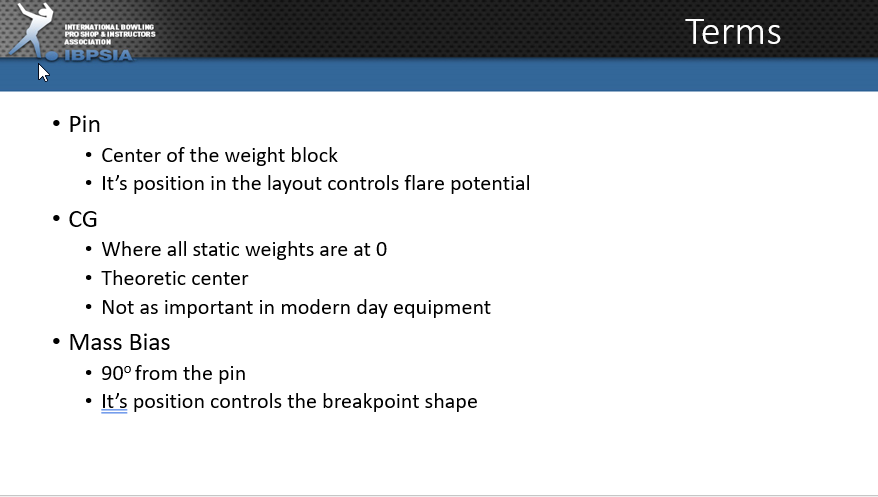
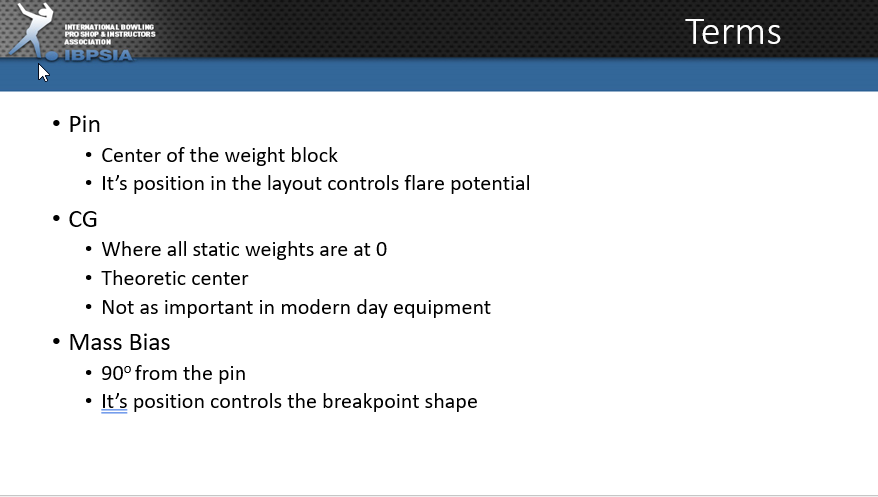
1. CG – Centre of Gravity
-
Definition: The CG marks the balance point of the ball's core. It’s usually indicated by a small dot or marking on the surface of the ball.
-
Function:
-
Helps determine the drilling layout.
-
Affects how the ball transitions through the skid, hook, and roll phases.
-
Closer to the grip, the reaction will be smoother.
-
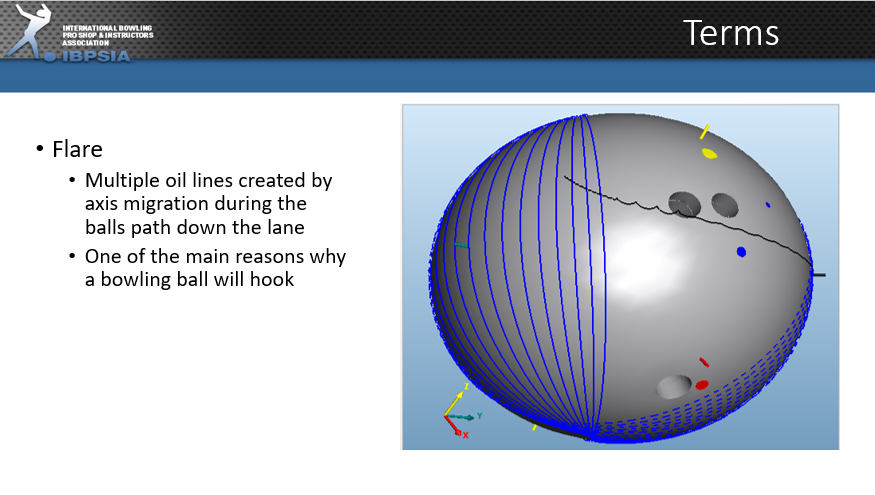
Farther from the grip, it can create more flare potential (depending on the layout).
- With the new regulations regarding the balance hole, as well as today’s equipment, it has become less of an important factor than it used to be.
-
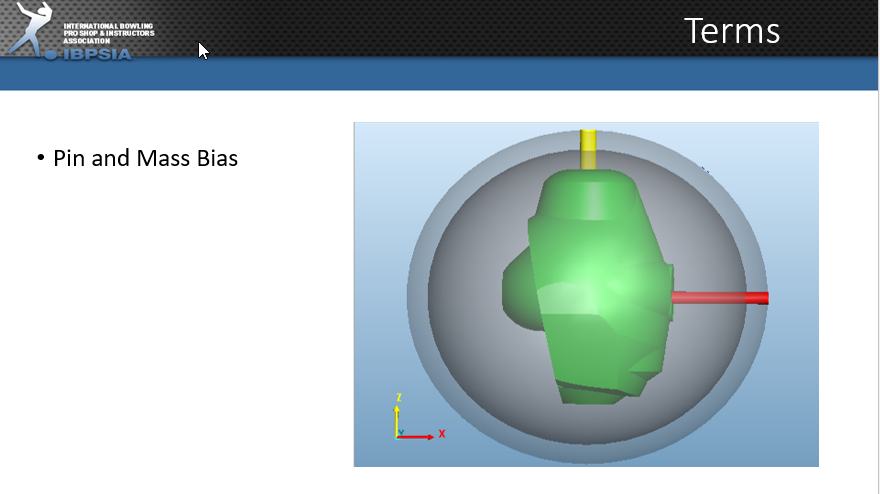
2. PIN
-
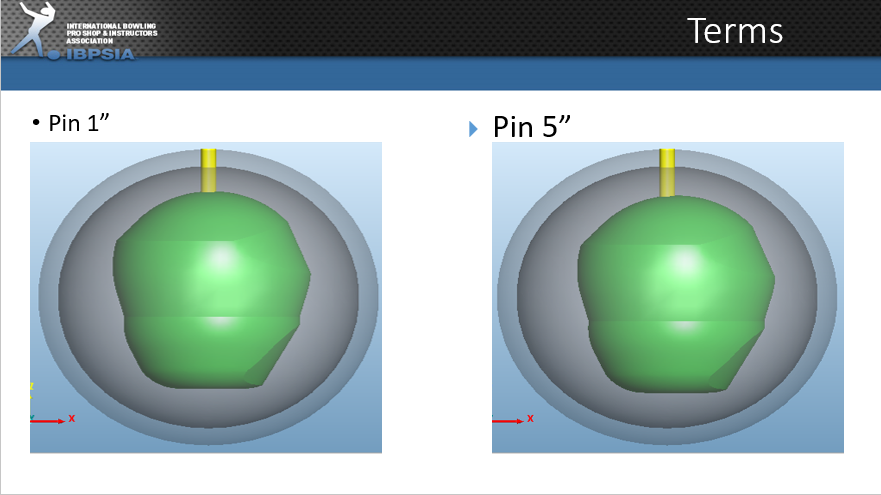
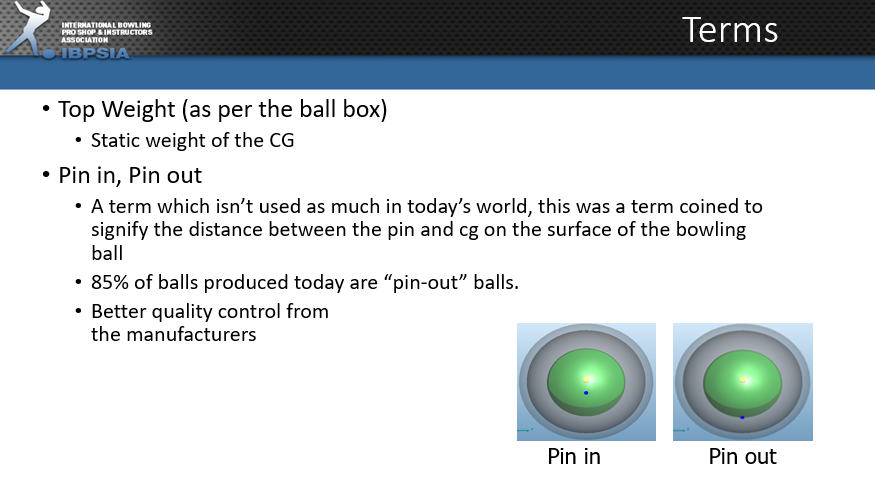
Definition: The PIN is the distance between the top of the core and the CG, shown as a small coloured dot on the ball.
-
Function:
-
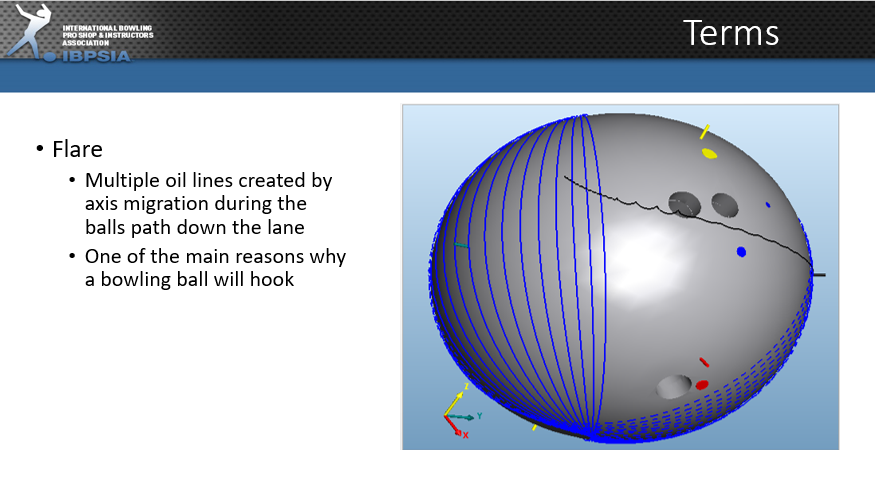
Affects the flare potential and length of the ball before it begins to hook.
-
A shorter PIN (e.g. 1–2") will create an earlier hook, more controlled motion.
-
A longer PIN (e.g. 4–5") will create more length and a sharper backend reaction.
-
-
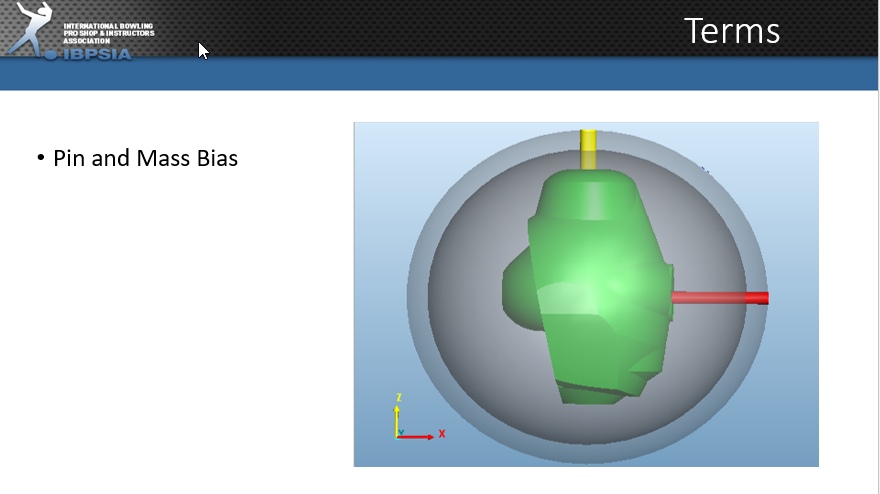
3. Mass Bias (MB)
-
Definition: Present in asymmetrical balls, it's the point where the core is imbalanced — usually marked with a symbol (e.g., a line, dot, or "MB" logo).
-
Function:
-
Controls the shape and sharpness of the hook, especially in the backend phase.
-
Crucial for advanced layouts — especially in high-performance balls.
-
Placement of the Mass Bias affects how quickly and how strongly the ball changes direction.
-
 Key takeaway
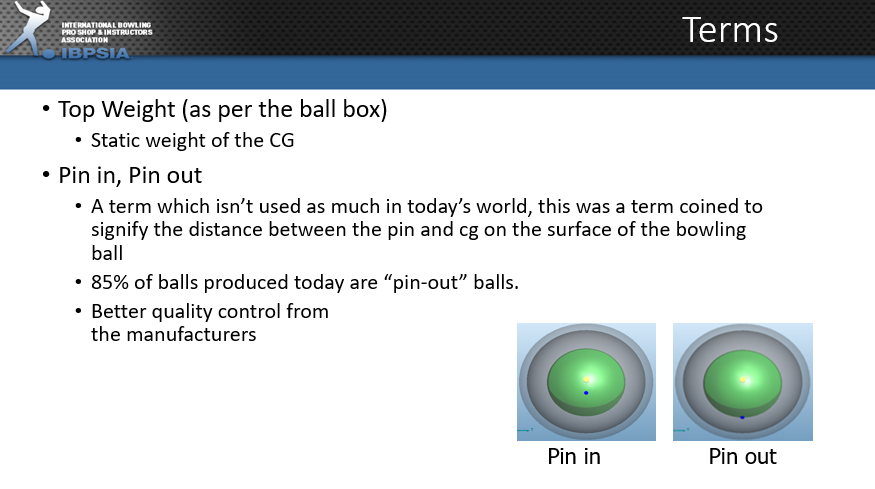
- The "pin in or out" refers to the orientation of the weight block, while "top weight" is a ball characteristic used to achieve the desired layout.
- The most important factor for performance is the layout, which is a combination of top weight, pin length, and mass bias location.
What are the different factors that influence the reaction of your bowling ball?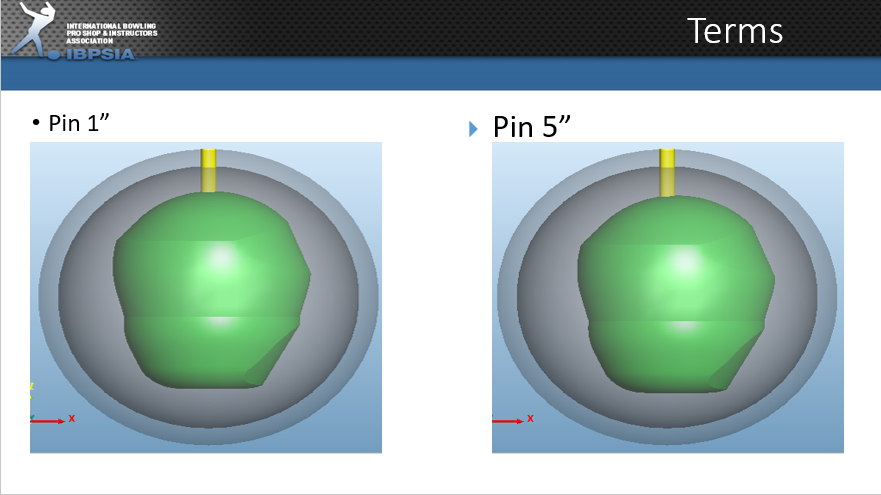
-
-
-
-