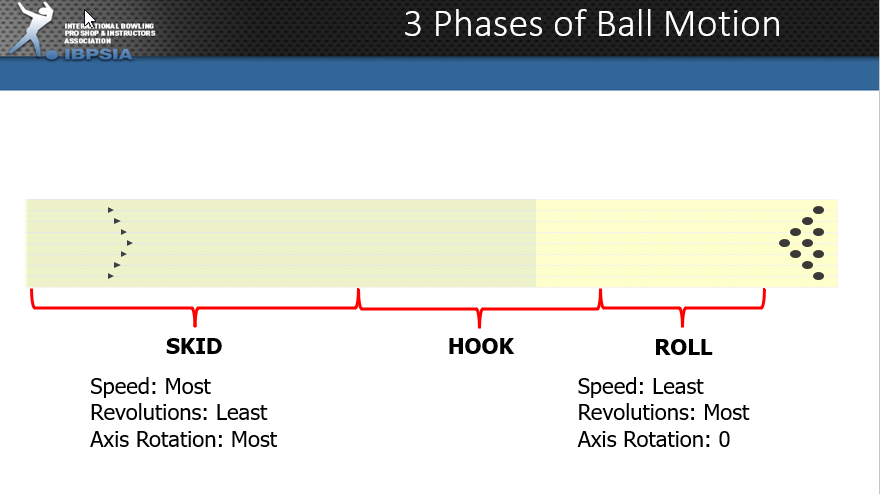
Here is the understanding of the 3 phases of the hook that the ball must go through!
1.
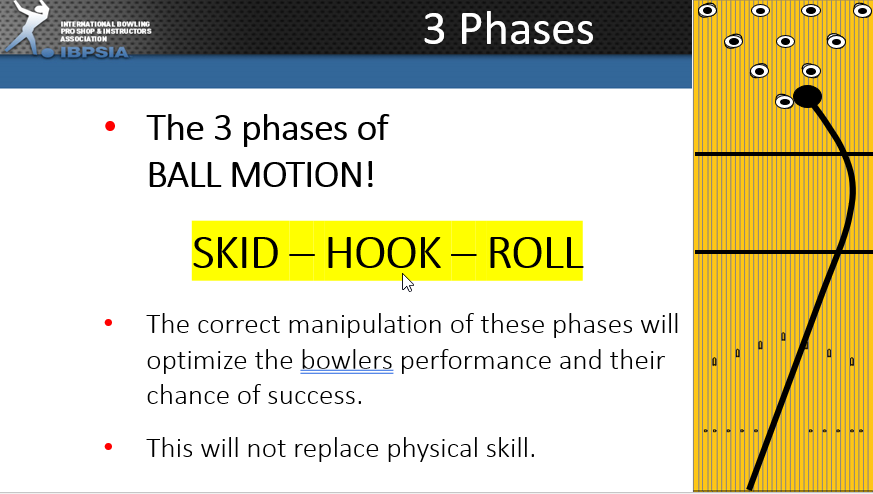
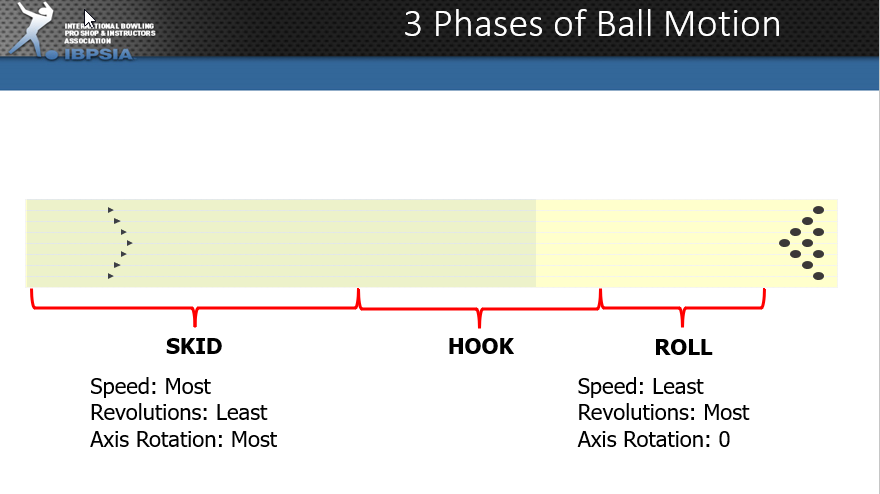
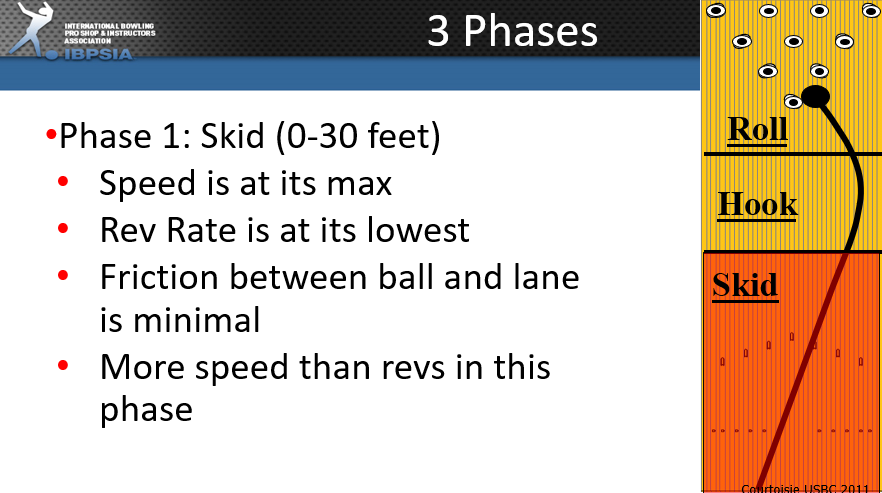
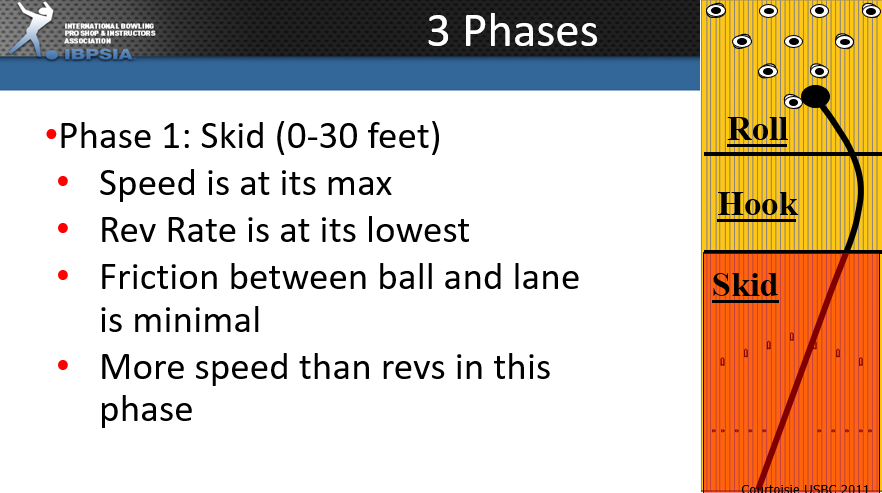
-Phase 1 of the lane is the front part, which goes from the foul line to 30 feet.
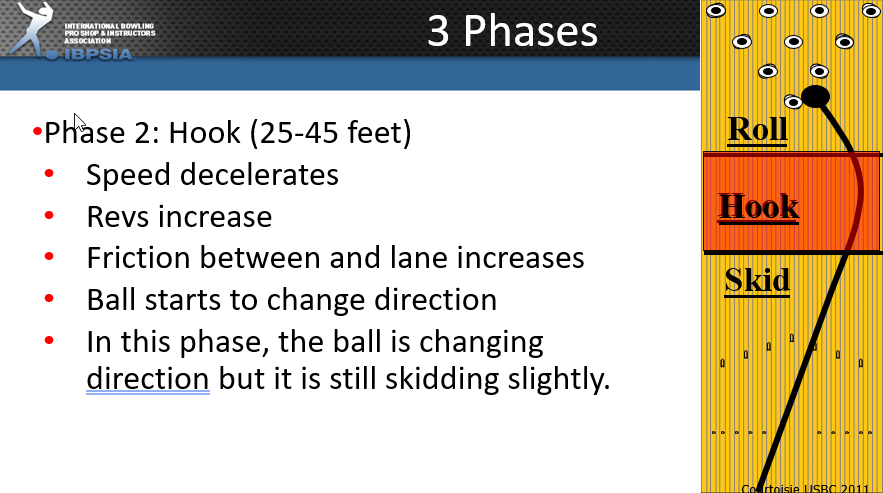
-Phase 2 is the mid-lane area, which ranges from 3025 to 45 feet.
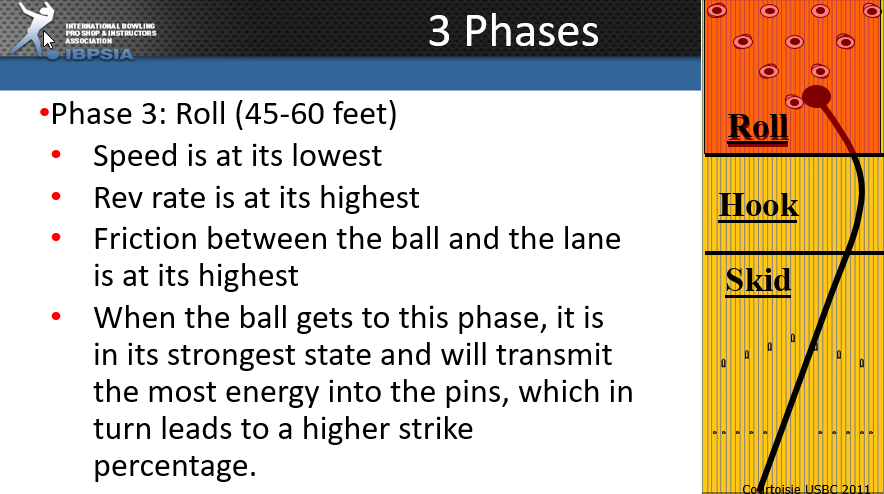
-Phase 3 is the back end of the lane, from 45 feet to the end of the pin deck.
-
Phase 1 – Skid Phase
During this initial phase, the bowling ball is primarily sliding down the lane.
-
The ball's speed is at its maximum, especially right at the release.
-
Its revolutions (rotation) are at their lowest.
-
The ball’s speed is always more dominant than its revolutions at this stage.
- Additionally, the friction contact point with the lane is at its minimum, meaning the ball is gliding with very little traction.
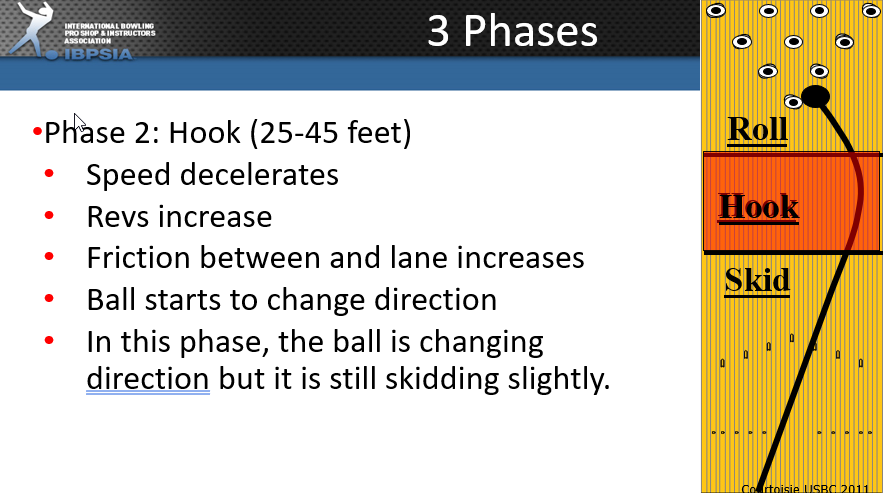
Phase 2 – Hook Phase
In this phase, the ball begins to hook.
-
It needs to slow down in order to change direction.
-
The revolutions (rotation) of the ball increase as it starts to turn.
-
The friction contact point with the lane increases during the hook, allowing the ball to grip the surface more effectively.
-
However, the ball still continues to slide slightly during this phase — it hasn't fully transitioned into rolling yet.
-
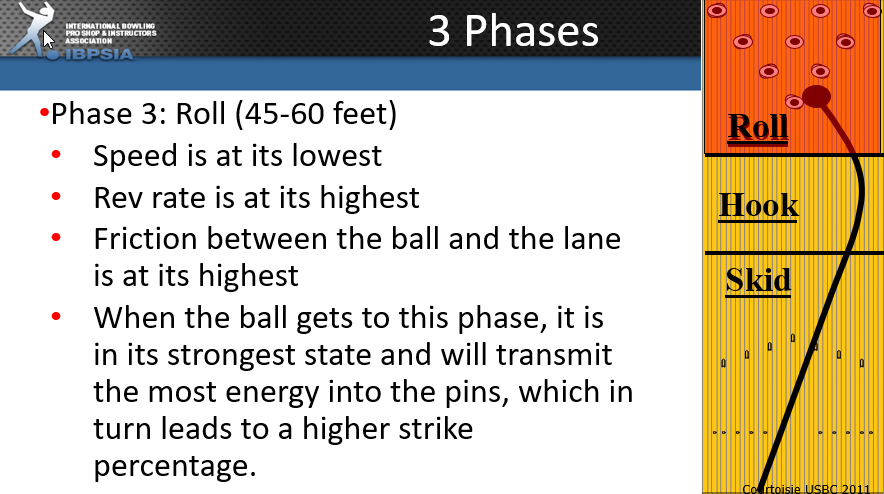
Phase 3 – Roll Phase
In this final phase, the ball transitions into a full rolling motion.
-
The ball is now at its lowest speed.
-
The friction contact point with the lane is at its highest, and its revolutions (rotation) are at their maximum.
-
This is the phase where the ball must transfer all its stored energy into the pins, maintaining its trajectory through impact.
-
Ideally, the ball continues through the pin deck and finishes in the middle, maximizing pin carry and scoring potential.
-
-