BALANCING
Balancing
? Balancing a Bowling Ball — Norms to Follow & Dodo Scale
When a bowling ball is drilled, holes for the fingers and thumb remove material and shift its center of gravity (CG).
To ensure the ball remains legal and properly balanced, pro shops measure the ball’s static balance using a dodo scale and follow USBC balance norms.
⚖️ 1. Norms to Follow — USBC Static Balance Rules
The United States Bowling Congress (USBC) sets the official balance limits that all drilled bowling balls must meet.
? USBC Legal Limits (Current as of 2025):
| Type of Weight Imbalance | Maximum Allowed Difference |
|---|---|
| Top or Bottom Weight | 3 ounces maximum |
| Side Weight | 3 ounce maximum |
| Finger or Thumb Weight | 3 ounce maximum |
⚠️ Weight holes (balance holes) are no longer allowed — since August 1, 2020.
Only gripping holes (fingers and thumb) are permitted.
? Static Weights Explained
| Term | Description | Ball Motion Effect |
|---|---|---|
| Top Weight | Weight above the ball’s center line | Helps delay hook (more length) |
| Bottom Weight | Weight below the ball’s center line | Promotes earlier roll |
| Side Weight | Difference between left/right halves | Affects flare and backend motion |
| Finger/Thumb Weight | Difference between upper/lower halves | Impacts roll and reaction smoothness |
Norm: Keep these weights within limits while achieving desired ball reaction.
Excessive imbalance makes the ball illegal and unpredictable.
⚙️ 2. Using a Dodo Scale to Measure Balance
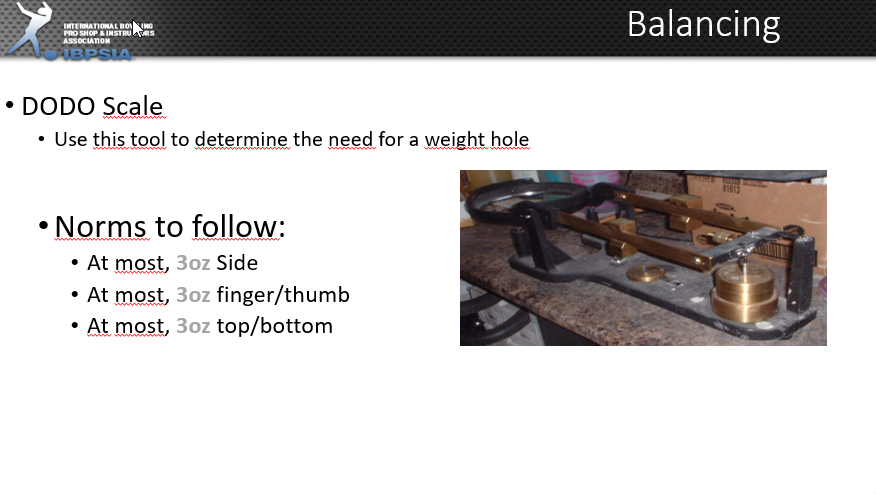
The dodo scale is a specialized tool used by pro shops to measure static imbalances (top, bottom, side, finger, and thumb weight) in ounces.
? Parts of a Dodo Scale
-
Base Platform: Holds the ball in place.
-
Balancing Arm / Beam: Works like a scale arm with weights to measure imbalance.
-
Pivot Point / Knife Edge: It allows the arm to move freely.
-
Indicator Dial / Counterweights: Shows weight difference in ounces.
? How to Use the Dodo Scale (Step-by-Step)
-
Find the Center of Gravity (CG):
-
Marked on the ball by the manufacturer.
-
It’s the point used as the reference for all balance measurements.
-
-
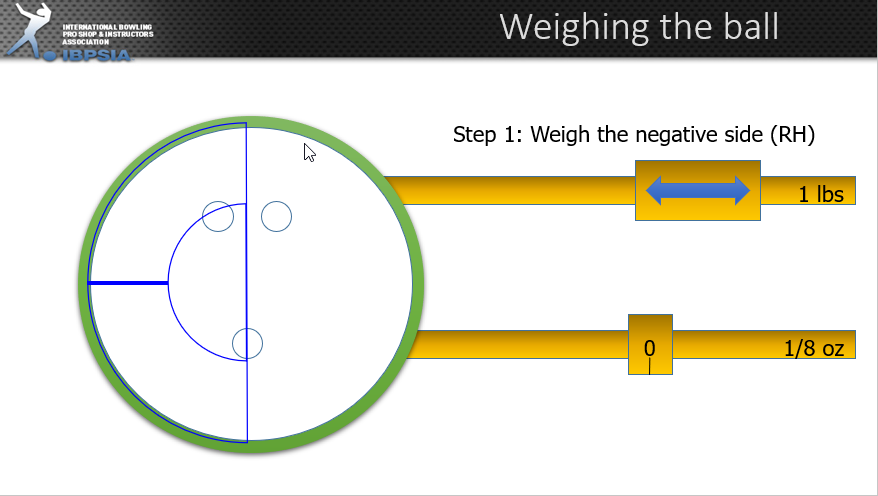
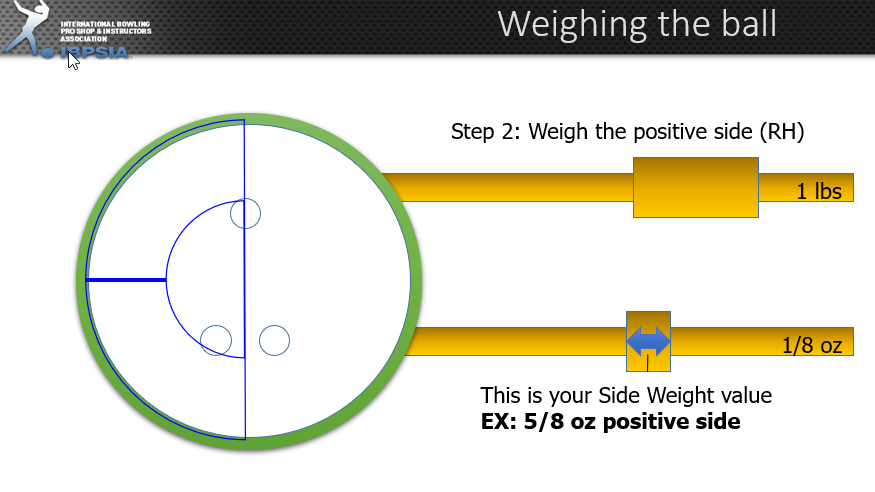
Measure Side Weight:
-
Place the ball on the dodo scale so the CG is aligned horizontally (left to right).
-
Rotate the ball 90°.
-
The scale shows the difference between the right and left halves (in ounces).
-
Must be ≤ 3 oz.
-
-
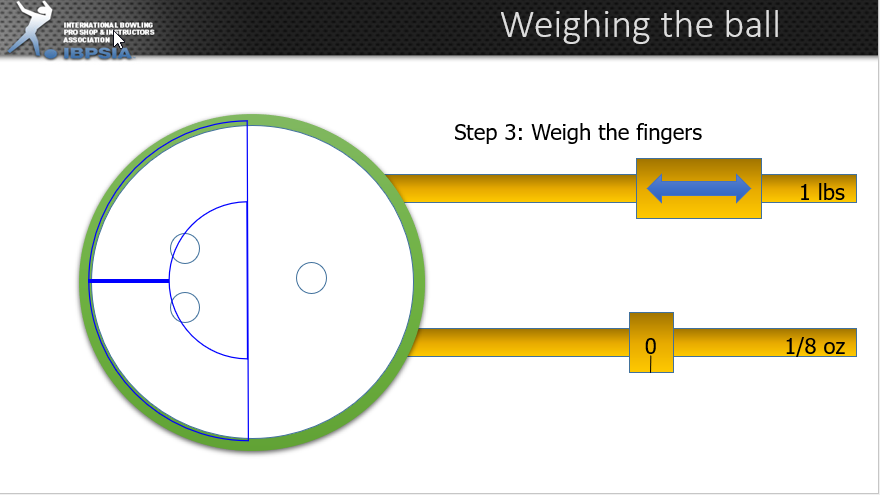
Measure Finger/Thumb Weight:
-
Rotate the ball so the CG is aligned vertically (top to bottom through the gripping holes).
-
The reading shows weight difference between finger and thumb sides.
-
Must be ≤ 3 oz.
-
-
Measure Top/Bottom Weight:
-
Place the ball with the CG on top and measure the vertical imbalance.
-
Reading must be ≤ 3 oz.
-
-
Adjust If Needed:
-
If imbalance exceeds the limit, adjust drilling depth or plug/redrill holes to bring the ball within legal range.
-
? Norms When Using a Dodo Scale
| Step | Norm / Best Practice |
|---|---|
| Before Drilling | Record factory top weight and CG location. |
| After Drilling | Check all three balances (top, side, finger/thumb). |
| Adjustment | Stay comfortably below USBC max limits (not exactly at them). |
| Documentation | Record final readings for reference. |
| Verification | Test-roll to confirm expected ball motion. |
⚙️ 3. Why Balancing Matters
Proper balance ensures that:
-
The ball rolls evenly and predictably.
-
The core orientation performs as designed.
-
The ball is USBC-legal for competition.
Unbalanced or illegal balls can:
-
React unpredictably on the lane.
-
Violate competition standards.
-
Affect the bowler’s release or control.
✅ Summary — Norms to Follow
| Category | Norm / Standard | Measured By |
|---|---|---|
| Static Balance | 3 oz top, 3 oz side, 3 oz finger/thumb | Dodo Scale |
| Dynamic Balance | Proper core layout and reaction shape | Dual Angle / CAD tools |
| Physical Fit | Comfortable grip and pitches | Fit tools / Pro fitting |
| No Balance Holes | Only finger & thumb holes allowed | USBC Rule |
| Check After Drilling | Verify legality before use | Dodo Scale Measurement |
? In Short
“Balancing a bowling ball” means making sure it meets USBC static balance limits and rolls as intended.
The dodo scale is the key tool used to measure and confirm those weight differences after drilling.
Weighing the ball
To weigh a bowling ball using a Dodo scale, follow these steps:
1. Set Up the Scale
Place the Dodo scale on a flat, stable surface. Ensure it's turned on and calibrated to zero.
2. Position the Ball
Place the bowling ball on the scale's cradle, ensuring it's centered and stable.
3. Read the Display
The scale will display the weight of the ball. Note the reading in ounces or grams.
4. Calculate the Weight
If the reading is in ounces, divide by 16 to convert to pounds. If in grams, divide by 1000 to convert to kilograms.
5. Verify Accuracy
For precision, repeat the measurement and check for consistency.
The Dodo scale is a specialized tool used in bowling to measure static imbalances in a ball, such as side, finger, and thumb weights. These measurements are crucial for customizing the ball's layout to match a bowler's style and preferences. However, for general weight measurements, a standard scale may suffice.
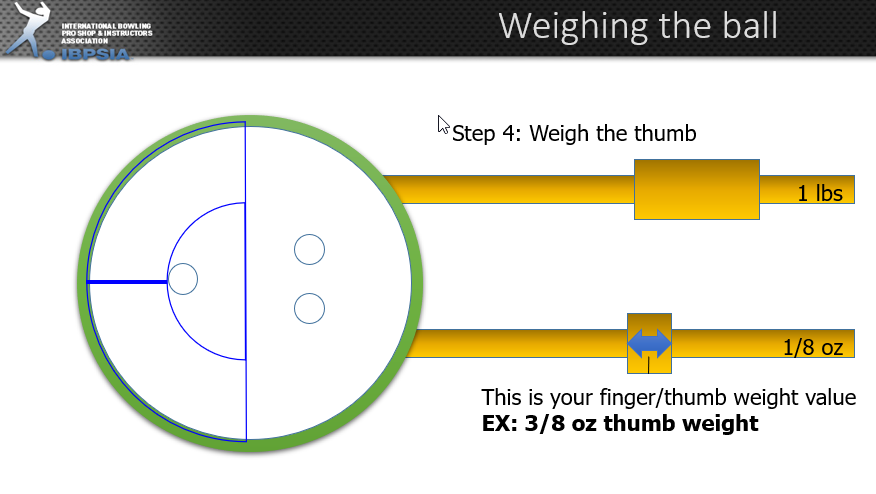
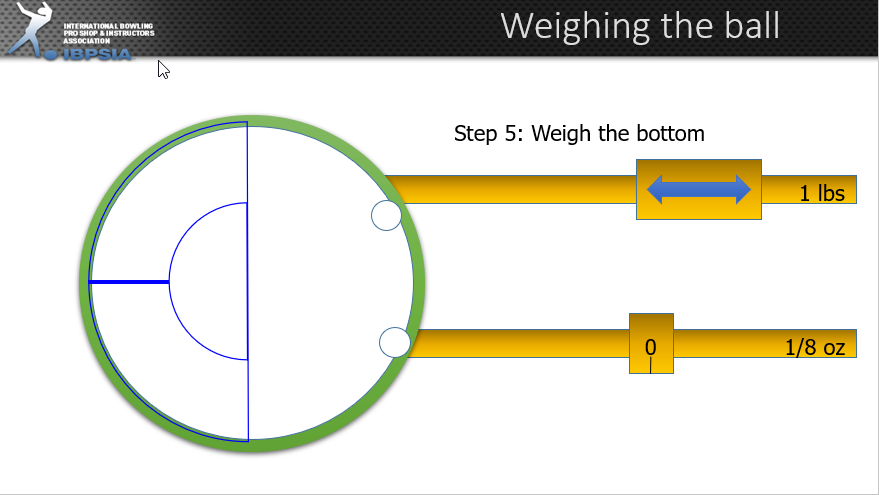
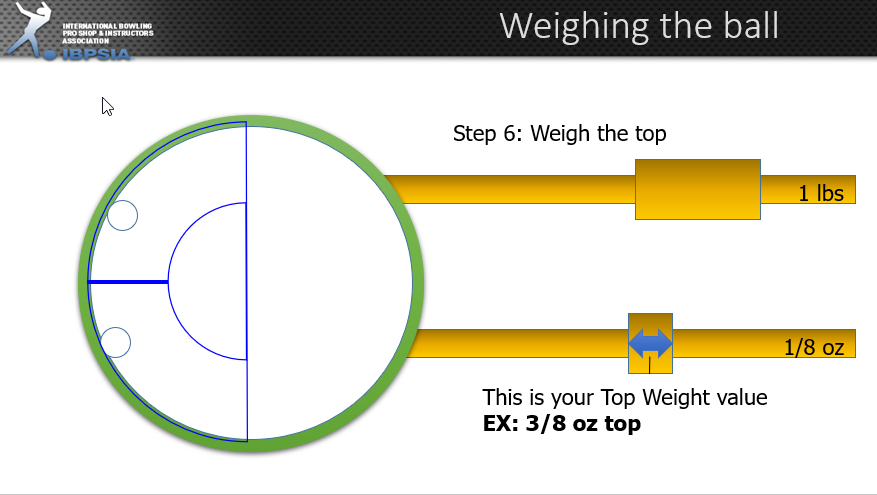
Here are the 6 steps for weighing your bowling balls with the dodo scale .....
STEP 1 :
STEP 2 :
STEP 3 :
STEP 4 :
STEP 5 :
STEP 6 :
✅ Final Tips
-
Verify Weight After Drilling: Drilling the ball for finger holes can slightly alter its weight. Always weigh the ball after drilling to ensure it meets your specifications.
-
Consult Professionals: For personalized recommendations, consult with a certified bowling coach or professional shop.